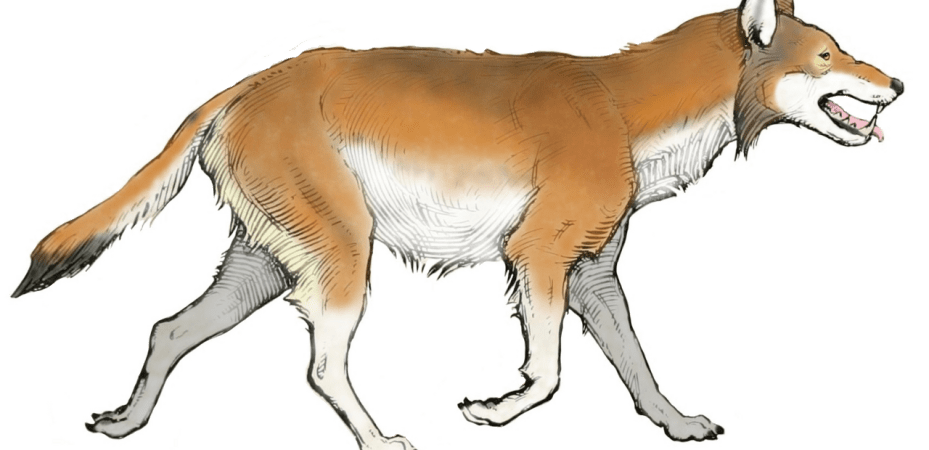
Social behavior doesn’t fossilize, but it is possible that Aenocyon dirus, the dire wolf, hunted in packs. (Schmökel et al.; Tong et al.)
Even though the current scientific thinking suggests that Aenocyon technically wasn’t part of the Canis line, it certainly did converge on wolves physically. Why not socially as well?
In real life, the ways in which wolves and bears compete are more complex (note: predation scenes):
However, if dire wolves didn’t hunt in packs, then there at least four thousand foolish individuals at the Pleistocene seep that we now call La Brea — only a few of whom are represented here.
Can they be brought back?
🐻❤️🦦
Some lagniappe on bears, boxing, and sloths:
Boxing? Really?
All respect to NatGeo and to paleontologists, but this is a sloth we’re talking about here!
Anyway, today humans can do something about those broken bones —
Featured image: Wikipedia, public domain.
Sources:
- Schmökel, H.; Farrell, A.; and Balisi, M. F. 2023. Subchondral defects resembling osteochondrosis dissecans in joint surfaces of the extinct saber-toothed cat Smilodon fatalis and dire wolf Aenocyon dirus. PLoS ONE 18(7): e0287656. https://journals.plos.org/plosone/article?id=10.1371/journal.pone.0287656
- Tong, H.; Chen, X.; Zhang, B.; Rothschild, B.; and others. 2020. Hypercarnivorous teeth and healed injuries to Canis chihliensis from Early Pleistocene Nihewan beds, China, support social hunting for ancestral wolves. PeerJ 8:e9858 https://peerj.com/articles/9858/

