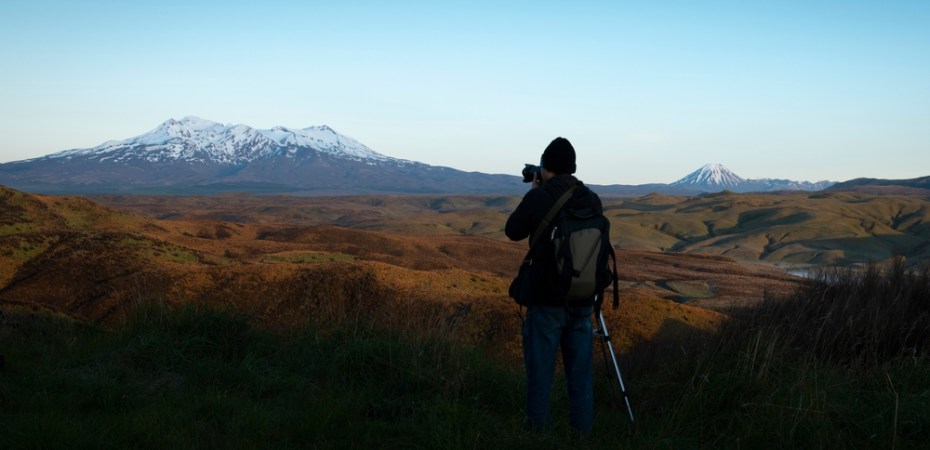
December 17, 2025, 12:41 p.m., Pacific: This is not really anything extraordinary but I wanted to give the new “Restless Volcanoes” thing a try-out — before something major happens that gets me very excited — and it is a change in monitoring parameters, however slight.
Per Volcano News, quoting GeoNet:
Volcanic Activity BulletinRUA – 2025/07
Wed Dec 17 2025 10:00 AM; Ruapehu Volcano
Volcanic Alert Level remains at 1
Aviation Colour Code remains at GreenThe temperature of Te Wai ā-moe (Ruapehu Crater Lake) is slowly rising again. The current temperature is now 17 – 18 °C, from a low of 12 °C in early November. We continue to measure low to moderate volcanic sulphur dioxide (SO2) gas emissions, and low levels of volcanic tremor. The Volcanic Alert Level remains at 1 and the Aviation Colour Code at Green.
Earlier this year, Te Wai ā-moe was in a cooling phase from late August to mid-October with the lake temperature dropping from about 17 °C to a low of about 12 °C. During that cooling, the amount of sulphur dioxide (SO2) gas coming out through the lake decreased, consistent with the cooling of the hydrothermal system beneath the lake.
There are now clear indications the lake is reheating, with an increase in temperature of about 5 °C since early November; this is a similar heating rate to that observed in July to September of this year. The daily average is currently around 17 – 18 °C. Both the increase and the current temperature are well within the expected norms.
The amount of sulphur dioxide (SO2) gas has remained low to moderate during the ongoing heating episode. Minor upwellings of hot water and yellow sulphur slicks were observed on the lake surface during a recent gas flight; the slicks are usually related to hot fluids entering the lake floor and melting sulphur. The amount of gas passing through the lake is within the normal range and volcanic tremor remains low.
These observations are consistent with ongoing, low-level volcanic activity at Ruapehu consistent with minor volcanic unrest. Therefore, the Volcanic Alert Level remains at 1 and the Aviation Colour Code remains Green.
More information:
The Volcanic Alert Level reflects the current level of volcanic unrest. The Volcanic Alert Level should not be used to forecast future activity.
Volcanic Alert Level 1 indicates the primary hazards are those expected during volcanic unrest: steam discharge, volcanic gas, earthquakes, landslides, and hydrothermal activity. While Volcanic Alert Level 1 is mostly associated with environmental hazards, potential for eruption hazards also exists and eruptions can still occur with little or no warning.
December 11, 2025, 9:06 a.m., Pacific: Since my last post below, Ruapehu’s Crater lake has warmed a couple of times, but that’s all. See the GVP page for details.
Per their last update:
Most Recent Weekly Report: 30 October-5 November 2024
GeoNet reported that minor unrest continued at Ruapehu as of 31 October. Te Wai a-moe (Ruapehu Crater Lake) has remained cool; however, monitoring data suggests that a slow heating trend is underway. The crater lake water temperature has increased from 8 degrees Celsius to 10-11 degrees Celsius since mid-October. Gas monitoring sensors have recorded low to moderate levels of sulfur dioxide (SO2) emissions, while volcanic tremor signals have also remained low. The Volcanic Alert Level remained at 1 (on a scale from 0-5) and the Aviation Color Code remained at Green (the lowest level on a four-color scale).
GeoNet currently has the volcano at Level 1, minor unrest.
Original post:
This New Zealand volcano is restive now, but experts say that an eruption does not appear imminent at the moment.
Update, June 10, 2022: For example:
Ruapehu has thrown some tantrums in the past, though.
This collection of shots Geoff Mackley took of Ruapehu eruptions in the 1990s is exciting!
Volcanologists note that such powerful eruptions are unlikely to occur from this current round of unrest.
He also got amazing video of the lahar that occurred in 2007 when the volcano’s crater lake ran out:
When something similar to this happened on
Christmas Eve, 1953, 151 people died.
More information:
Dr. Erik Klemetti on the current unrest
Featured image: Janice Chen/Shutterstock
 Flight To Wonder
😊😊