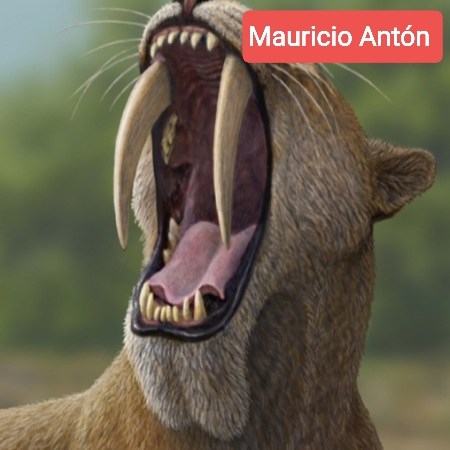
Meet the Staple-Puller cat!
It’s a cat, right? It’s got saberteeth.
Actually Eusmilus bidentatus up there is a nimravid.
What’s a nimravid?

Cats in pajamas, mostly, but still cat-like, particularly in the teeth.
(Image: Figure 3.20 in Mauricio Antón’s “Sabertooth” (CC BY-ND-NC-SA 4.0)
Nimravids were the very first cat-like group of sabertoothed mammals to evolve.
But they were not the first known group of sabertoothed carnivorous mammals.
That honor goes to an oxyaenid group that is much older than nimravids.
An oxyaenid skull is shown at the top of this graphic (the two skulls are not to scale):
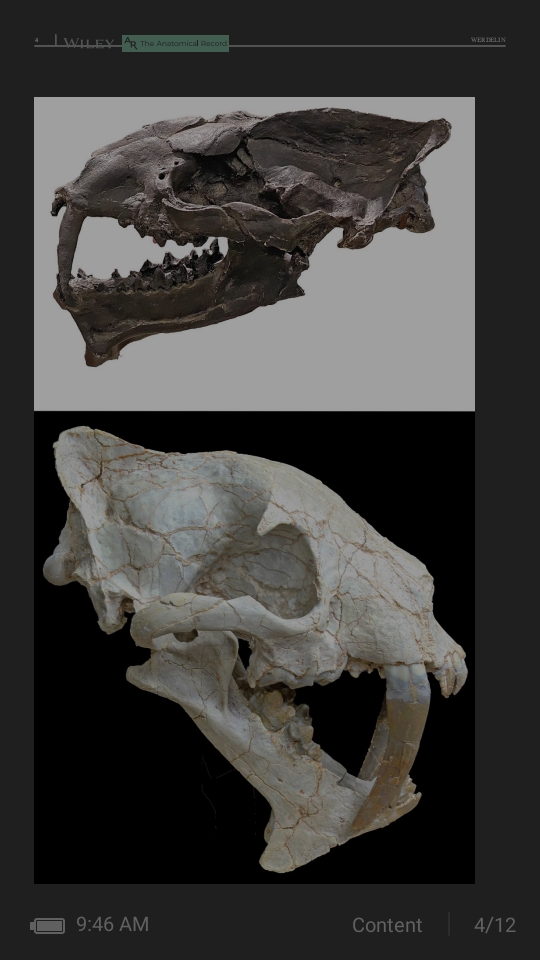
Happy Halloween! (Image: Figure 3, Werdelin, 2024, CC BY-NC-ND-SA 4.0)
No one would mistake such a primitive-looking, long-faced beast for a cat!
But the skull below it, short-faced and toothy though that one is, is not from a sabertoothed cat.
It is Hoplophoneus — another nimravid, coming up soon in this series.
🐾🐾🐾
I suppose E. D. Cope had the biblical son of Cush in mind when he named these fossil sabertooths “Nimravidae” in the late 19th century.
And of course he filed them under “Cats” (Family Felidae).
Really, really old “cats,” going back to the early Oligocene on today’s geologic time scale. (Nowadays, even older Eocene nimravids are known from China.)
Amazing “cats!”
Cope also thought that the sabercat Nimravides was a nimravid, which is why he gave it that weird name.
Nimravids (eventually minus the true sabertoothed cat Nimravides) were considered members of Family Felidae through at least the first half of the 20th century and had such nicknames as “paleofelids” and “false sabertooth cats.”
Scientific perspectives change over time, and currently Nimravidae is an independent family, just like Felidae, Canidae, etc., in the Order Carnivora.
Orders aren’t only for soldiers
Instead of diving into the deep, meandering river that is Taxonomy, let’s just say that the specimen at the top of that image above is a sabertoothed member of the Order Oxyaenidae, which is extinct and which, back in its Paleocene to Middle Eocene day, included both conetooths and sabertooths (these, mainly in the early to middle Eocene). (Prothero; Werdelin, 2024; Zack et al.)
The bottom skull belonged to a nimravid member of the Order Carnivora — called a carnivoran to distinguish animals in this group from those of other meat-eating orders (who can all be called carnivores — a technicality that is one of those winding Taxonomy meanders).
“Hoplophoneus” is that nimravid’s genus name.
“Eusmilus” is a genus name, too (Barrett, 2021).
In fact, we aren’t going to get into species much at all with nimravids.
It’s tricky even with modern cats, and the rarity and often fragmented remains of fossil carnivorans like sabercats and nimravids takes that difficulty up several notches.
🐾🐾🐾
As you can see from cats and dogs, saberteeth are not a membership requirement for Order Carnivora.
Paleontologists look for other details, such as which cheek teeth a fossil critter was using on its dinners.
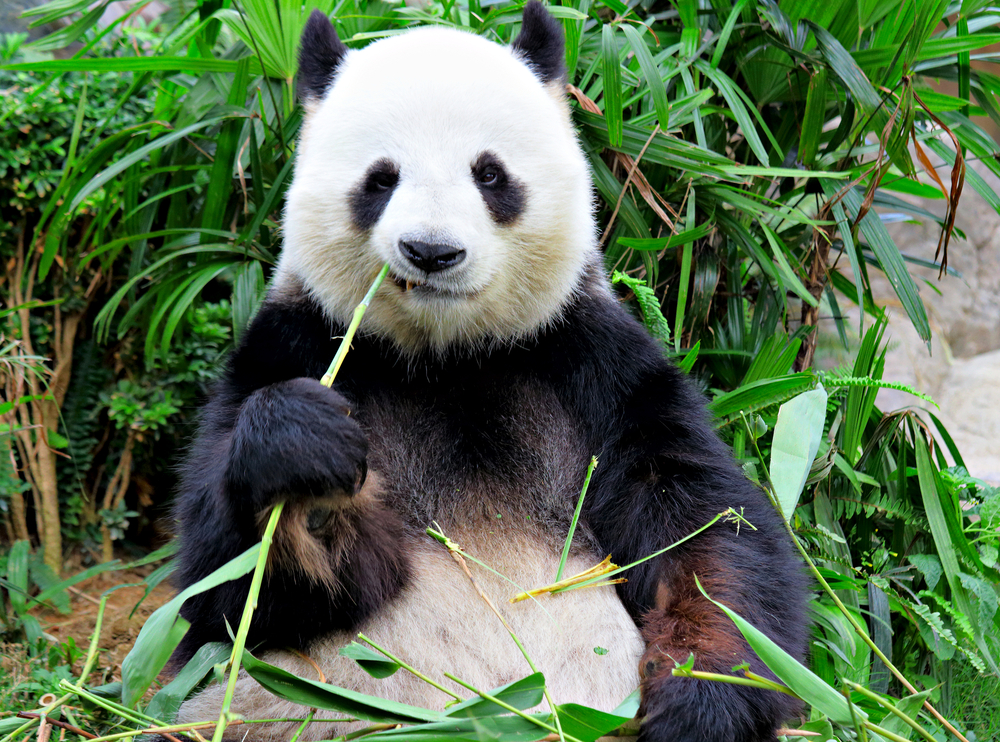
“I has a carnassial, too.” — Giant panda, a bear and therefore a carnivoran. (Image: leungchopan/Shutterstock)
Down through time, developing certain cheek teeth into scissors-like carnassials for fast and efficient meat processing has given carnivores in various mammal orders an evolutionary advantage.
Which teeth? It varies from order to order.
Oxyaenid carnassials were the first upper and second lower molars, while carnivorans, past and present, use the fourth upper premolar and first lower molar. (Osborn and Wortman)
As an added twist, unusually large carnassials can be a sabertooth feature.
However, this does vary a lot in nimravids, as it also does in sabercats.
Both Eusmilus and Hoplophoneus were extreme in every way, including the carnassials. So were advanced sabercats, like Smilodon, that came onto the scene much later.
But like the Miocene Metailurus and Dinofelis cats in Family Felidae, some of the very early nimravids in Eocene China — Maofelis, for example — had dentition that was midway between sabertooth and conetooth, although the upper canines were slightly flattened. (Averianov et al.)
What was Eusmilus?
As mentioned, it was an extreme sabertooth back in the early Oligicene, but the Staple-Puller cat Eusmilus bidentatus — Europe’s earliest known nimravid — was only the size of a Eurasian lynx! (Antón, 2013)
Nimravids were rather flatfooted and probably not graceful in the same ways that lynxes are.
Most of these early nimravids were smaller than Smilodon or Homotherium would be, but over in North America around this time, Eusmilus species were bigger than Europe’s bidentatus.
The one shown below, Eusmilus adelos, might have been the size of a small African lion (Barrett, 2021):
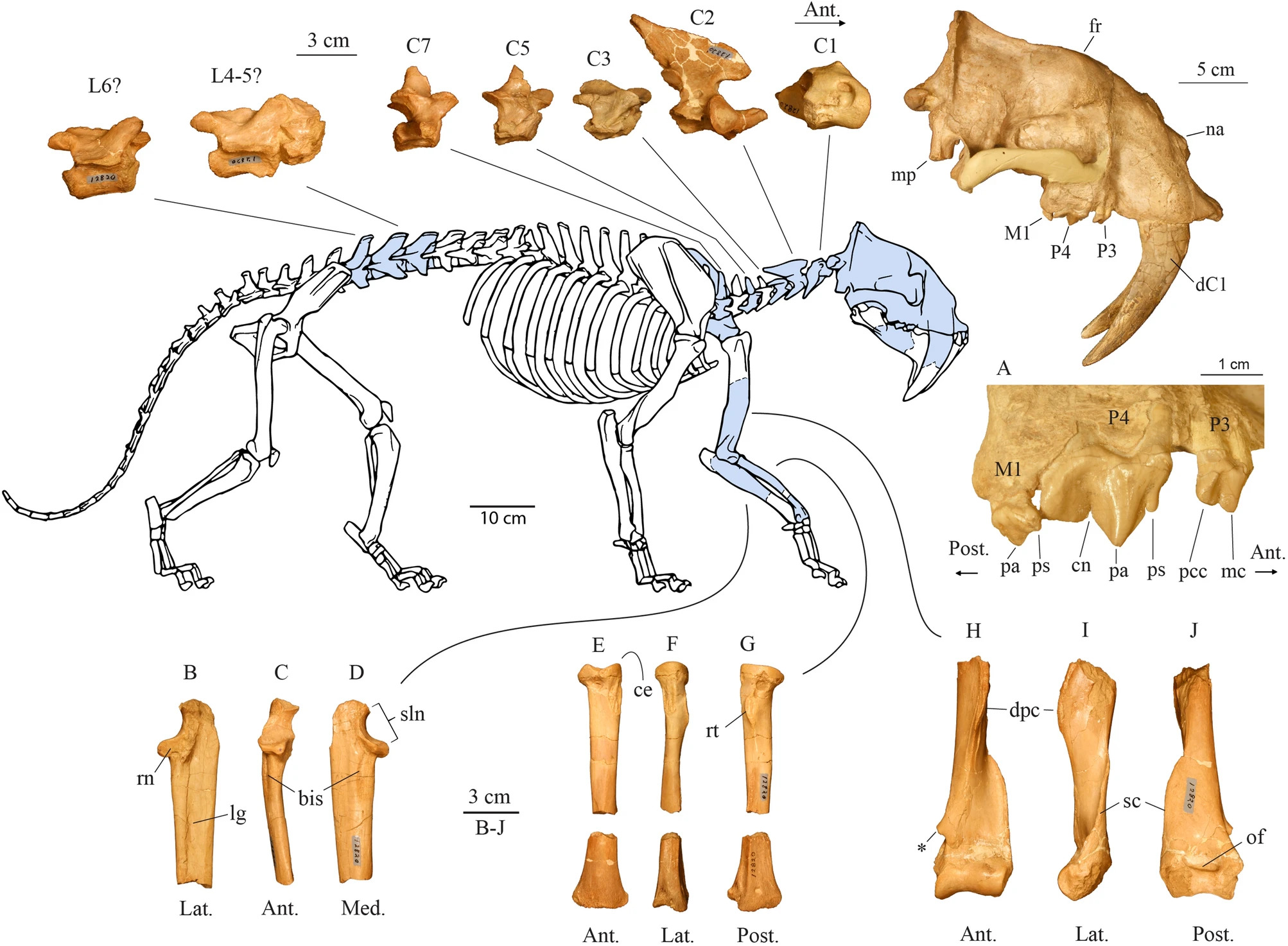
Figure 1, Barrett, 2021, reconstruction by Dhruv Franklin, CC BY-NC-ND-SA 4.0
The blue areas are from fossils; the rest is a well-educated guess based on knowledge of how other fossil cats and cat-like animals, as well as living cats, are put together.
Boffins were extremely lucky to get even this many fossils.
Nimravids are very rare in the rocky archives, and what few remains have been recognized are either isolated teeth or bony fragments.
It doesn’t help, either, that nimravid, barbourofeline, and cat are all built pretty much alike (although that fact does help paleoartists like Maricio Antón and Dhruv Franklin reconstruct long-extinct animals).
It’s hard to tell them apart sometimes.
This is especially true of Eusmilus and Hoplophoneus.
The Eusmilus-Hoplophoneus question
Even with a limited fossil record, paleontologists have noted what seems to be convergence between Eusmilus and Hoplophoneus.
In plain English, some of the arcane details that only a paleontologist could love are the same in both nimravids.
BUT, as this layperson understands it, there are enough differences to cast reasonable doubt on the idea that Eusmilus = Hoplophoneus.
Barrett (2016) argued that Eusmilus was Hoplophoneus and then, in 2021, recognized it a genus again.
This is a good example of why our blog series is light on taxonomical details. They can change dramatically. Not only that, the associated discussions are jargon-filled and confusing to this layperson.
Better to just meet the animals and get just a quick glimpse of what they were like.
Antón went with Eusmilus in Sabertooth, writing, “In this book, we keep the traditional generic assignment [Eusmilus] for lack of a clear solution to this problem.”
By now, you might have guessed which nimravid is up next. We will also be revisiting some old friends, too!
Some lagniappe:
Reportedly, that unfortunate nimravud was Dinictis, who we will meet early next month.
Featured image: Figure 3.22 in Antón’s book Sabertooth, CC BY-NC-ND-SA 4.0. I watermarked it, as he does with images on his blog, and hope that it might encourage you to purchase his book, with all its wonderful artwork and detailed information on sabertooths from Permian times on down to yesterday, some 12,000 years ago.
Disclosure: I am just a fan of this paleoartist and have no personal, financial, or business connection with Mauricio Antón. I just think that readers of my blog should know about Sabertooth.
Sources:
- Agustí, J., and Antón, M. 2002. Mammoths, sabertooths, and hominids: 65 million years of mammalian evolution in Europe. New York and Chichester: Columbia University Press. Retrieved from https://play.google.com/store/books/details?id=O17Kw8L2dAgC
- Antón, M. 2013. Sabertooth. Bloomington: Indiana University Press. Retrieved from https://play.google.com/store/books/details?id=dVcqAAAAQBAJ
- Averianov, A.; Obraztsova, E.; Danilov, I.; Skutschas, P.; and Jin, J. 2016. First nimravid skull from Asia. Scientific Reports, 6(1): 25812.
- Barrett, P. Z. 2016. Taxonomic and systematic revisions to the North American Nimravidae (Mammalia, Carnivora). PeerJ, 4: e1658.
- ___. 2021. The largest hoplophonine and a complex new hypothesis of nimravid evolution. Scientific Reports, 11(1): 21078.
- Osborn, H. F., and Wortman, J. L. 1900. Oxyaena and Patriofelis restudied as terrestrial creodonts. Bulletin of the AMNH; v. 13, article 20.
- Poust, A. W.; Barrett, P. Z.; and Tomiya, S. 2022. An early nimravid from California and the rise of hypercarnivorous mammals after the middle Eocene climatic optimum. Biology Letters, 18(10): 20220291.
- Prothero, D. R. 2006. After the Dinosaurs: The Age of Mammals. Bloomington and Indianapolis: Indiana University Press. Retrieved from https://play.google.com/store/books/details?id=Qh82IW-HHWAC.
- Werdelin, L. 2024. Hypercanines: Not just for sabertooths. The Anatomical Record. https://anatomypubs.onlinelibrary.wiley.com/doi/10.1002/ar.25510
- Werdelin, L.; Yamaguchi, N.; Johnson, W. E.; and O’Brien, S. J. 2010. Phylogeny and evolution of cats (Felidae), in Biology and Conservation of Wild Felids, eds. Macdonald, D. W., and Loveridge, A. J., 59-82. Oxford: Oxford University Press.
- Zack, S. P.; Poust, A. W.; and Wagner, H. 2022. Diegoaelurus, a new machaeroidine (Oxyaenidae) from the Santiago Formation (late Uintan) of southern California and the relationships of Machaeroidinae, the oldest group of sabertooth mammals. PeerJ, 10: e13032.

