We have former Vella cats enough to last us for several months, but this is the last published Vella volcano episode. I was working on the next one, in what promised to be a very interesting month, when I got the email from Amazon (see pinned writing update). Right now I’m working through that three-part Iceland series, so it looks as though we’ll have guest videos on Sunday for the next few weeks. When Sunday Morning Volcanoes 2024 resumes, the featured image will be similar but square.
We don’t need a video to recognize this volcano. Its signature event is enough: a fast-rising, rapidly expanding mushroom cloud above the South Pacific, imaged by an overhead satellite just before sunset on January 15, 2022.
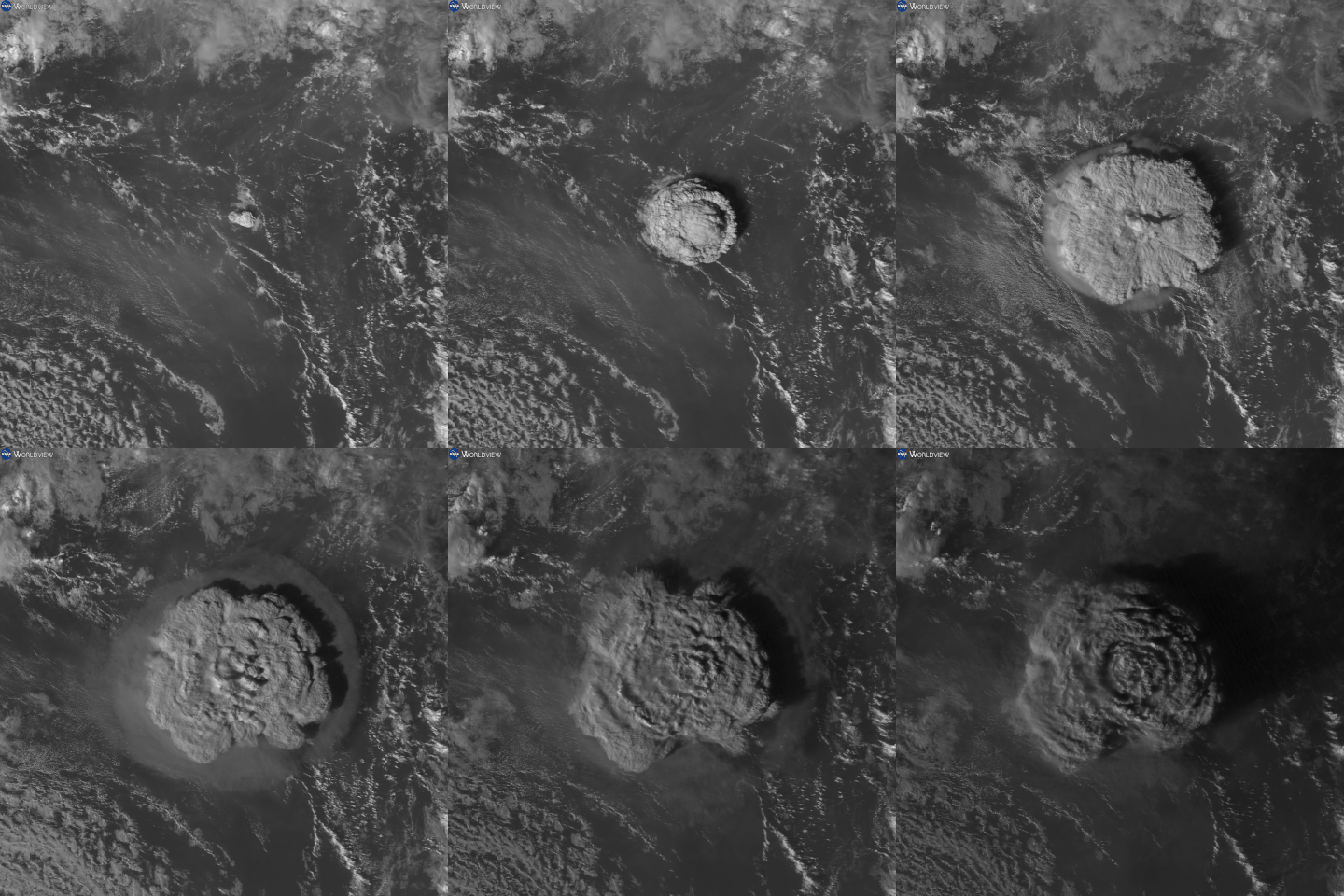
Japan Meteorological Agency/NASA/SPoRT via Wikimedia, CC BY-SA 3.0.
It is shown with almost every story on Hunga Tonga and with each news article about the latest scientific discovery regarding this, the most powerful eruption of the modern era (thus far).
But why is the Hunga Tonga eruption important, besides that one record-breaking blast?
“Thus far” up above is a clue, but to grasp it we first need to learn a little about the volcano.
What is Hunga Volcano?
Alessandro Gallione, CC BY-NC-ND 2.0.
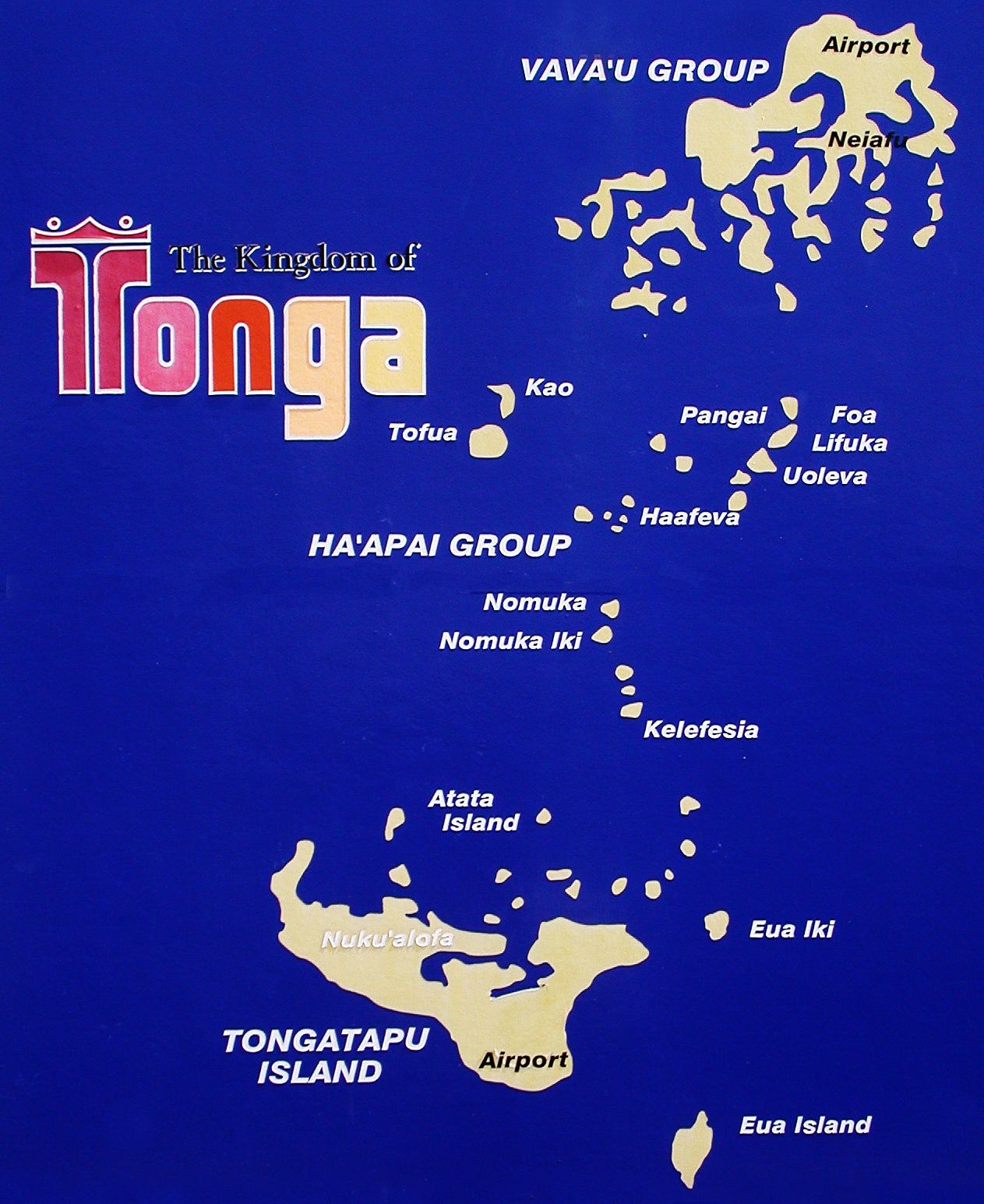
The Kingdom of Tonga is a modern monarchy composed of 169 islands in the southwest Pacific, not too far from Fiji but more than a thousand miles northeast of New Zealand.
The royals and most of their subjects live on the island of Tongatapu, less than forty miles southeast of the volcano Hunga, a caldera and one of twelve confirmed submarine volcanoes in that neighborhood, according to the Smithsonian’s Global Volcanism Program (GVP) website.
This close to the Tonga-Kermadec Trench, there probably are more than twelve subduction zone volcanoes down there, but the ocean is deep and mostly unexplored — seafloor mapping is expensive as well as difficult, although more resources have been devoted to this work since Hunga Tonga’s huge 2022 blast.
Calderas actually aren’t all that rare, and prior to January 15, there was nothing particularly “super” about Hunga Volcano, either.
As for its name: all you can see of Hunga above water are two small rocky islands — Hunga Tonga and Hunga Ha’apai.
Until recently, they were covered in vegetation and inhabited by birds and other marine wildlife.
They sit so close together that drifting volcanic debris united them during an eruptive phase in late 2014/early 2015.

Source, Figure 1
After that, the overall complex was named Hunga Tonga-Hunga Ha’apai (HTHH).
It became the first new volcanic island since Surtsey to withstand marine erosion for more than six months, and scientists hoped that chemical changes like those that toughened up Surtsey also would occur at HTHH, extending its life for at least several decades.
Vents on HTHH’s sandy isthmus connection were among the culprits behind the last eruption series, which began on December 20, 2021, so most researchers call that the Hunga Tonga-Hunga Ha’apai eruption.
This name is used a lot because of all the expert discussion, ongoing still, about that series’ spectacular ending (it blew away the HTHH connecting material on January 15, 2022, and dropped the two rocky islands so much that only their tips show now; nevertheless, Hunga Tonga and Hunga Ha’apai islands are still there, which is astounding!).
Since many of us think of it all as Hunga Tonga, we’re going to use that informal term in this episode.
Other than the two little rocks sticking up out of the Pacific, there is no sign of the roughly three-mile-wide Hunga Caldera, sitting just 500 feet below the waves.
Until Hunga Tonga’s big blast — which punched a 2.5-mile wide, half-mile deep hole through the caldera, per the BBC — no one realized that this shallow depth is within shooting distance of outer space!
Hunga Tonga is a stratovolcano and does tower more than 6,500 feet above the seafloor.
The two islands grew out of its northern caldera rim during prehistoric eruptions.
Waves sometimes break over shallow reef areas in the southern portion of Hunga’s caldera. This is also where submarine eruptions happened in 1912 (the volcano’s earliest recorded eruption), 1937, and 1988.
These all were surtseyan events like those we met last week, with impressive roostertail jets of ashy dark plumes and boiling steam explosions every few minutes — not very dangerous to people who don’t venture into rock-throwing distance — which can be surprisingly far in any surtseyan blast.
Hunga Tonga did the same surtseyan thing when it woke up again in 2009.
That 2009 eruption near the islands of Hunga Tonga and Hunga Ha’apai was fascinating to watch, but brief.
Then, from December 2014 to January 2015, the show encored.
Here it is on video, for example, wowing viewers in 2015:
More surtseyan eruptions (including the one shown in that video) started up in the same general area, drawing in tourists and producing enough volcanic material to eventually build HHTH, which attracted the attention of scientists worldwide.
After January 2015, Hunga Tonga went silent for almost seven years.
None of the happy, inquisitive people exploring HHTH Island during that quiet spell, and none of the Tongans who were enjoying the benefits of all this increased tourism and scientific interest (at least until COVID pandemic responses locked international visitors out of the kingdom from 2020 on), could have known that this underwater fire mountain had its own agenda.
What kind of agenda?
In a 2022 paper published several months after the last and biggest eruption, Yuen et al. suggest that Hunga Tonga’s earlier eruptions were due to steady inflow of small amounts of magma from lower down in the Earth.
Among other things, this process forced bubbles of gas out of the magma, pressurizing the chamber and making some of the molten rock erupt.
At the same time, since the laws of geochemistry and geophysics dictate that volcanic gases come out of solution as magma cools, there was an additional source of increased gas volume farther away from the inflowing hot stuff also priming the chamber — even when the volcano appeared to be quiet.
Those visitors to HHTH Island during the time of apparent peace from the start of 2015 through late 2021 were walking on and sailing over a ticking bomb.
What happened in the Hunga Tonga eruption?
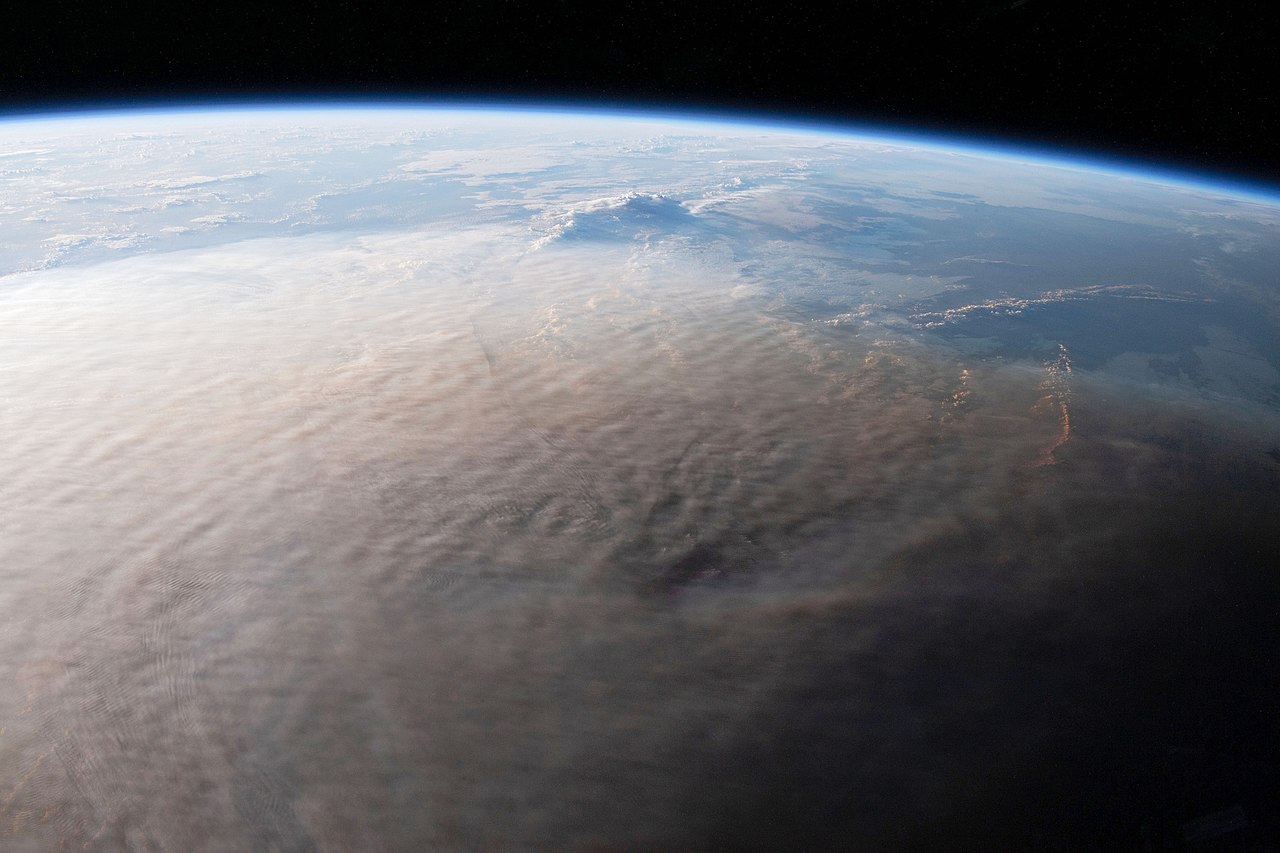
NASA Earth Observatory via Wikimedia, public domain.
You’re probably familiar with the chaotic, record-breaking details — that plume stretching from the Pacific Ocean into the mesosphere, where our atmosphere becomes space; the loud BOOM! sounds knocking some people over in Tonga and heard as far away as Alaska; the global tsunami; and sad videos of ashfall and damage from tsunamis as tall as 60 feet or more in Tonga.
So let’s look at what wasn’t visible and yet might have been driving these events (staying with Yuen et al.’s interpretation for consistency — but see Coda at post’s end).
To briefly summarize the world-famous events, Hunga Tonga woke up in a mean mood on December 20, 2021, with eruptions that were still surtseyan but packing much more muscle.
Ten days later, its surtseyan activity was less intense than its explosive bursts.
The Tonga Geological Survey (TGS), for example, recorded this, occurring on the sandy isthmus connection:
The explosive phase went on intermittently until January 13, 2022, when the eruption got even stronger.
On the 14th, Hunga Tongs hoisted a three-mile-wide plume twelve miles into the sky, prompting tsunami warnings in Tonga (a few relatively small waves had been coming in since the 13th, according to Borrero et al.)
TGS went out and took this drone video from a respectful distance on the 14th:
In it, the Hunga Tonga plume already looks like a nuclear blast cloud, with bell-shaped pressure waves, lots of convection, and pyroclastic flows.
The boffins thought that they had filmed the peak of an unprecedented Hunga Tonga eruption. You might have seen images from it and considered that was the main event.
It wasn’t.
What happened the next day, in Dr. Shane Cronin’s view, was more than seventy times as intense!
Nobody expected that climactic paroxysm, and everyone is still trying to understand how it happened.
At first, the most likely explanation seemed to be that Hunga Tonga had collapsed, Mount St. Helens 1980 style. However, this did not explain the world-shaking, space-touching blast and other products of volcanic power.
In the PBS NOVA video above, Dr. Cronin describes two of the most popular theories that have been offered to date:
- Volcanic material rose suddenly, causing a violent explosion and pushing water away in tsunami waves.
- The caldera collapsed into an emptied magma chamber. Seawater rushed in, made contact with magma, and exploded.
He favors the second theory, but Yuen et al. have come up with a third:
The powerful, gas-driven explosion increased fragmentation in the deeper parts of the vent conduit (which vastly increased the amount of hot magma surface area available for seawater to interact with when it broke through and flashed into steam under conditions that made it a supercritical fluid — neither liquid nor gas, but with properties of both and apparently capable of causing the extreme effects.
Perhaps that’s correct. Or maybe the actual answer is “None of the above.” There are other ideas under discussion and a consensus might be reached on one of these three hypotheses or on some other proposal that has yet to be made.
All this effort and brain power, mobilized because ordinary old Hunga Tonga stirred!
It woke up the academic world to an enormous threat potential from submarine volcanoes, particularly those close to the surface.
And that world realized that it knows next to nothing about them.
Why is the Hunga Tonga eruption important?
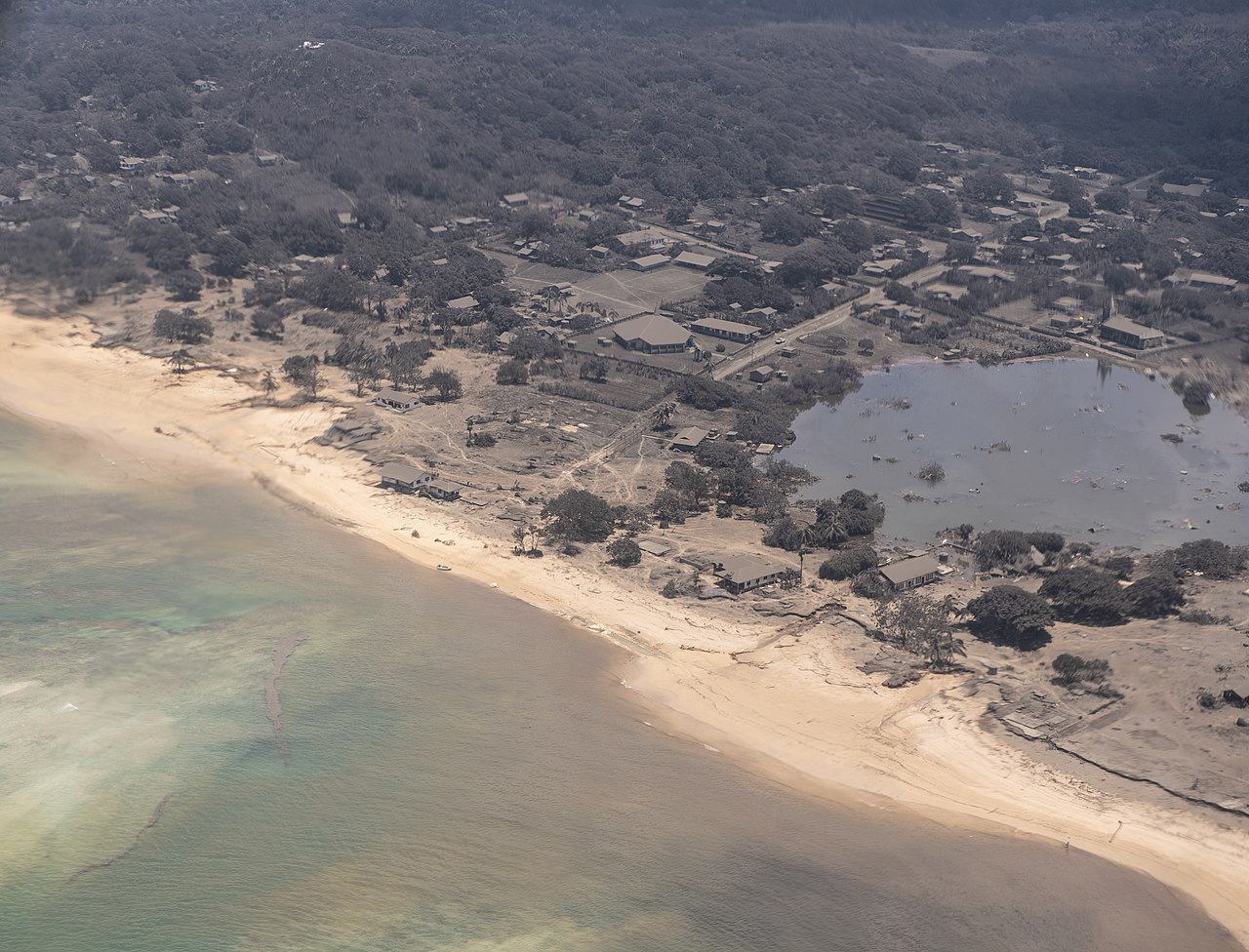
New Zealand Defence Force, via Wikimedia, CC BY-SA 4.0.
The papers listed under “Sources” below are a good place to start checking out details about the scientific reasons for its importance.
Any laypeople in Tonga, particularly those who appeared in or took the videos included in the NOVA show, also can tell you why it’s important to be aware of such a threat in your neighborhood.
As for the rest of us, well, if you have seen the original Jaws movie, you might remember the scene where Sheriff Brody looks out over the sea after first learning that there is a man-eater concealed beneath its surface.
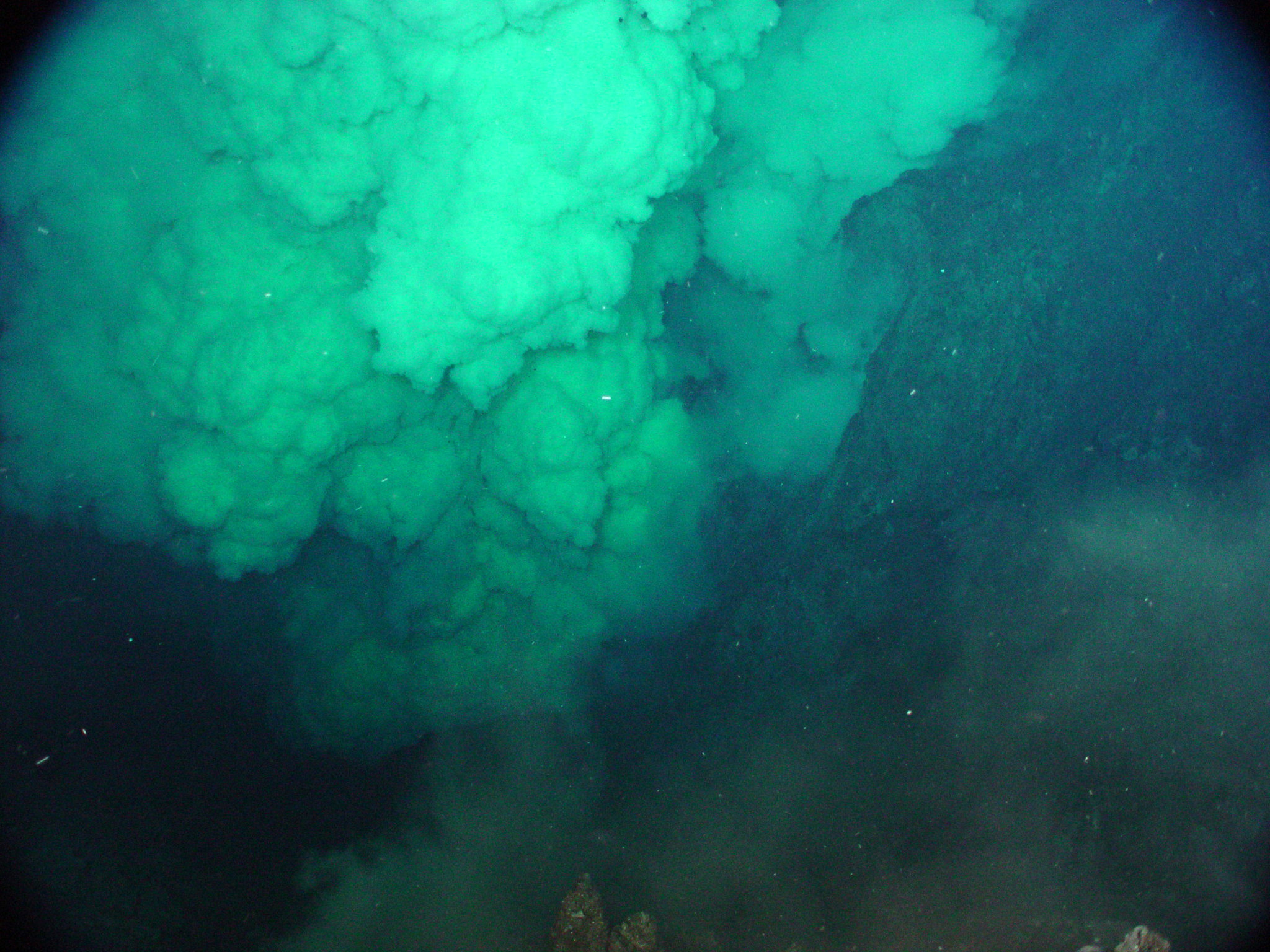
It’s hard to know what’s going on down there. (Image: USFWS Pacific, CC BY-NC 2.0)
It is a simple moment visually, but one filled with brooding threat.
Hunga Tonga’s eruption was a real-life version of that Hollywood moment — there are many submarine volcanoes out there capable of such a blast because they are somewhat explosive and have vents close enough to the surface to blow things sky-high again, if water gets in the same way.
For instance, Yuen et al. point to Kick-’em-Jenny — an active Caribbean volcano just barely submerged off Grenada’s coast.
No one knows for sure how it got that lovely name, but the scientists note that if it ever went off the way Hunga Tonga did on January 15, 2022, every nation with an Atlantic and/or Caribbean coast could suffer serious consequences.
This would be the most catastrophic way for all of us to learn that there is a Kick-’em-Jenny Volcano!
People are paying a lot more attention to submarine volcanoes these days, funding studies on them; building public awareness of volcanoes and tsunami awareness; and starting the major task of finding and mapping those submarine “Jaws” before they strike.
This increased awareness of the very real threat from submarine volcanoes is why the Hunga Tonga eruption is so important: it got us started on the right path.
But there is still a long way to go
Monitoring:
Tonga Geological Services, Government of Tonga: https://www.facebook.com/tongageologicalservice
More information:
Global Volcanism Program: https://volcano.si.edu/volcano.cfm?vn=243040
Coda: Recently some New Zealand volcanologists announced a new hypothesis for the January 15, 2022, blast. They will follow up with extensive fieldwork to test their proposal.
If you enjoyed this post, tips are welcome via the secure Stripe donation link. I won’t be saving your email for marketing or other spam, so here’s a big thank you in advance!
Sources include:
Alvarez, R., and Camacho, M. 2023. Plumbing system of Hunga Tonga Hunga Ha’apai Volcano. Journal of Earth Science, 34(3): 706-716.
Astafyeva, E.; Maletckii, B.; Mikesell, T. D.; Munaibari, E.; and others. 2022. The 15 January 2022 Hunga Tonga eruption history as inferred from ionospheric observations. Geophysical Research Letters, 49(10): e2022GL098827.
BBC. 2022. Immense crater hole created in Tonga volcano. https://www.bbc.com/news/science-environment-61567521
Borrero, J. C.; Cronin, S. J.; Latu’ila, F. H.; Tukuafu, P.; and others. 2023. Tsunami runup and inundation in Tonga from the January 2022 eruption of Hunga Volcano. Pure and Applied Geophysics, 180(1): 1-22.
Cronin, S. 2023. A year on, we know why the Tongan eruption was so violent. It’s a wake-up call to watch other submarine volcanoes. https://theconversation.com/a-year-on-we-know-why-the-tongan-eruption-was-so-violent-its-a-wake-up-call-to-watch-other-submarine-volcanoes-175734
Kusky, T. M. 2022. Déjà vu: might future eruptions of Hunga Tonga-Hunga Ha’apai volcano be a repeat of the devastating eruption of Santorini, Greece (1650 BC)?. Journal of Earth Science, 33(2): 229-235.
Lynett, P.; McCann, M.; Zhou, Z.; Renteria, W.; and others. 2022. Diverse tsunamigenesis triggered by the Hunga Tonga-Hunga Ha’apai eruption. Nature, 609(7928): 728-733.
Millan, L.; Santee, M. L.; Lambert, A.; Livesey, N. J.; and others. 2022. The Hunga Tonga‐Hunga Ha’apai hydration of the stratosphere. Geophysical Research Letters, 49(13): e2022GL099381.
NASA Visualization Studio. 2019 Visualization of Hunga Tonga-Hunga Ha’apai. https://youtu.be/ixvk3NWZPjw?si=OSSQ409azxtvxtUq
Public Broadcasting System (PBS). 2023. NOVA. Hidden volcano abyss: Behind Tonga’s massive eruption.
Schoeberl, M. R.; Wang, Y.; Ueyama, R.; Dessler, A.; and others. 2023. The estimated climate impact of the Hunga Tonga‐Hunga Ha’apai eruption plume. Geophysical Research Letters, 50(18), e2023GL104634.
Wikipedia. 2024. 2022 Hunga Tonga-Hunga Ha’apai eruption and tsunami. https://en.m.wikipedia.org/wiki/2022_Hunga_Tonga%E2%80%93Hunga_Ha%CA%BBapai_eruption_and_tsunami Last accessed February 27, 2024.
___. 2024. Supercritical fluid. https://en.m.wikipedia.org/wiki/Supercritical_fluid Last accessed February 28, 2024.
Yuen, D. A.; Scruggs, M. A.; Spera, F. J.; Zheng, Y.; and others. 2022. Under the surface: Pressure-induced planetary-scale waves, volcanic lightning, and gaseous clouds caused by the submarine eruption of Hunga Tonga-Hunga Ha’apai volcano. Earthquake Research Advances, 2(3): 100134.
Zheng, Y.; Hu, H.; Spera, F.; Scruggs, M.; and others. 2023. Episodic magma hammers for the 15 January 2023 cataclysmic eruption of Hunga Tonga-Hunga Ha’apai. Geophysical Research Letters, 50(8): e2023GL102763.

