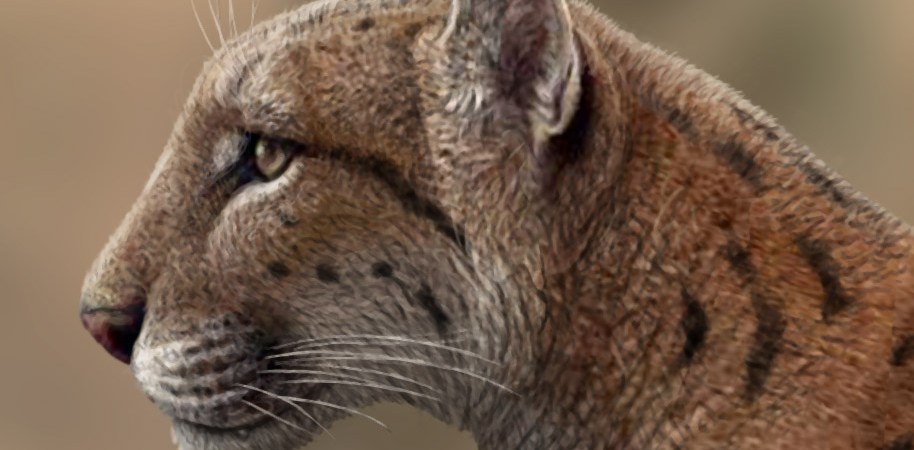
Meet Yoshi.
Isn’t that one of the most beautiful cat portraits you’ve ever seen? (Image source, CC BY-NC-ND-SA 4.0)
Yoshi wormed its way in here, as cats do. I had been planning to just cover Metailurus in this post.
In large part, Yoshi is now included because of that gorgeous image, which the whole world should see.
But it’s also because Yoshi, like Metailurus (coming up soon), is a good example of our final special-feature theme: human uncertainty.
There’s a blurry line between early sabercats (a/k/a Machairodontinae) and conical-toothed cats (Felinae: a group that’s still around today).
That line is broad as well as blurry and will actually take three more posts to explore. This one introduces the Metailurini: a group once known as “false sabertooths” because it seems to overlap sabertooths and conetooths and is still difficult for paleontologists to classify today.
The basic reference for this post series — Mauricio Antón’s Sabertooth — treats the Metailurini as sabercats and so will we.
In the middle
Yoshi looks a lot like a cheetah, doesn’t it?
That is a real resemblance.
We’ve seen enough of Mauricio Antón’s work by now to know that he doesn’t half-bake it by doing CGI on an extant cat and calling that a prehistoric sabercat reconstruction.
As he himself has shared in Sabertooth, as well as at his blog and in this video —
— Antón bases his work on the actual fossils and then applies his knowledge of feline anatomy, along with special computer programs, to present the most accurate reconstruction possible.
If Mauricio Antón draws a Miocene sabercat — Yoshi has sabers, but they’re short and barely show — and it looks like a cheetah, then the living animal probably was built like a cheetah.
(Antón also discusses the cheetah resemblance at that link: here it is again. He notes that Yoshi did have long legs and a graceful build, but the question of whether it hunted like a cheetah is still open.)
Now let’s meet Metailurus.
This is the feature image that I was going to use before Yoshi dazzled me:
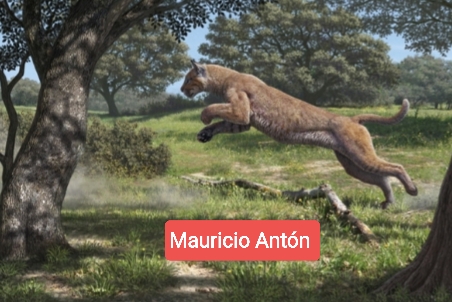
Figure 3.31 in “Sabertooth,” CC BY-NC–ND-SA 4.0
Metailurus looks like a puma, doesn’t it?

Eric Kilby via Wikimedia, CC BY 2.0
Metailurus major was the size of a large leopard, but it was built like a modern puma, though with longer hind legs (Yoshi had long hind legs, too). (Antón; Antón, 2013)
Those two sabercats must have been amazing jumpers.
Yet the puma lineage, which also includes cheetahs, was not yet a thing when Yoshi and Metailurus prowled the Earth 8-9 million years ago. (Werdelin et al.)
Did pumas and cheetahs, when they arrived, copy these older cats?
That’s impossible to say.
Chatar et al. (2024) note that the resemblance between Metailurini and Felinae could be convergence or it could be conservatism — the tendency in hypercarnivores to evolve the same shapes over and over again.
The resemblance definitely wasn’t passed along by inheritance.
As we’ll see in a couple of weeks, sabercats and cone-tooths likely have different ancestors.
Not only that — the Metailurini took their own evolutionary path, developing saberteeth that weren’t as extteme as the highly advanced cutlery of otherwise cat-like Machairodus and Nimravides/Machairodus.
What are the Metailurini?
…Metailurini is essentially a waste-basket for taxa that show some sabretooth features but can not be placed in either the Machairodus or the Paramachaerodus lineages…
— Werdelin et al.
By “Machairodus” and “Paramachaerodus,” Werdelin et al. mean “Homotherini” and “Smilodontini,” respectively — the two basic subgroups of sabercats — and they are not showing disrespect by calling “Metailurini” a waste-basket taxon.
This is a common term among some professional fossil herders. It’s a more useful way to keep track of fossils they’re not sure about (human uncertainty is the special feature in this post, after all).
The old technique of filing every Miocene saber-toothed cat under “Machairodus” was helpful at first, when every saber-toothed cat fossil was new, but it caused much confusion among paleontologists later on. Efforts to clear things up are still going on. (Antón, 2013; Werdelin et al.)
Today, after researchers get more fossil material or otherwise better understand some long-ago animal, they can reach into the “wastebasket” and pull out one of the mysterious critters to study and perhaps to rename in terms of their new concept of its identity and its place in the evolutionary big picture.
Yoshi is a good example of this. (Antón)
As I understand Antón and some other sources, Yoshi used to be called Metailurus minor (this sabercat being a bit smaller than M. major).

“Metailurus major” fossils aren’t as impressive as Smilodon’s, but this cougar-like Miocene cat was tough enough to thrive alongside the big sabercats. (Image: Izvora, via Wikimedia, CC BY-SA 3.0)
Another name for it was Metailurus parvulus (parvulus being Latin for “small,” although it was about the size of a puma, not a lynx or a house cat.
Then 21st-century paleontologists found and described an incredbly well preserved skull in the Balkans — the model for Antón’s cat portrait.
Studying it, boffins recognized enough differences from Metailurus to put this sabercat into a new genus, which they named Yoshi.
I don’t know if they were Nintendo fans or chose that for some other reason, but it’s a pretty name for a very pretty Miocene sabercat.
As you might have guessed, “Metailurini” was named for Metailurus, but it also includes other Miocene fossil kitties with upper canines that were rather long, somewhat flattened, and slightly curved — midway between conical-toothed and saber-toothed cats. (Pollock et al.; Shelbourne and Lautenschlager)
All Metailurini also had very cat-like bodies, including the skull.
Remember: most sabercats — even primitive Machairodus a little bit — had other physical features besides saberteeth. These could include, depending on species, other dental changes as well as skull shape changes; a long, muscular neck; a wrestler-like front end; a short back; relatively short hind legs compared to the forelegs; and a stubby lynx-like tail. (Antón, 2013)
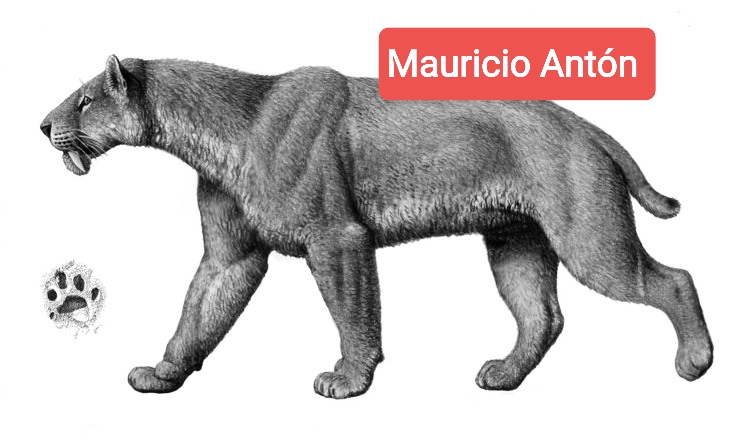
Exhibit A in the cat family: “Smilodon populator.” (Image: Mauricio Antón, CC BY-NC-ND-SA 4.0)
The Metailurini had those sabertooth-like upper canines, and that was about it.
Not much is known about the other three Metailurini that were identified at the time when Sabertooth came out (Antón, 2013; Jiangzuo et al., 2023):
- Stenailurus
- Adelphailurus
- And for some paleontologists, Fortunictis.
Those are in addition to Metailurus and the next sabercat in this post series — Dinofelis.
I think Dinofelis was the last one (more on that next time).
For some reason, the Metailurini apparently did not evolve into a lineage of more and more advanced sabercats as the Homotherini and Smilodontni did.
More could be said about the Metailurini, but not by me. For us laypeople, it is a road leading to madness.
While reading up for this post I learned that scientific knowledge of the Metailurini is growing fast.
It looks as though some researchers have upended the whole wastebasket and are sorting through almost everything it contains as well as reopening some fairly well established other sabercat taxa drawers.
Better for us to end with Antón’s advice;
And remember that no matter [how] many times we change their names, the real, once living animals are the thing that matters.
A little lagniappe. This video of a puma discovering physics has millions of views but here it is, just in case you haven’t come across it yet.
Featured image: Mauricio Antón, CC BY-NC-ND-SA 4.
Sources:
- Agustí, J., and Antón, M. 2002. Mammoths, sabertooths, and hominids: 65 million years of mammalian evolution in Europe. New York and Chichester: Columbia University Press. Retrieved from https://play.google.com/store/books/details?id=O17Kw8L2dAgC
- Antón, M. n.d. Metailurus or Yoshi? Meet the real cats behind the names.
https://chasingsabretooths.wordpress.com/2014/06/04/metailurus-or-yoshi-meet-the-real-cats-behind-the-names/ - Antón, M. 2013. Sabertooth. Bloomington: Indiana University Press. Retrieved from https://play.google.com/store/books/details?id=dVcqAAAAQBAJ
- Chatar, N.; Fischer, V.; and Tseng, Z. J. 2022. Many-to-one function of cat-like mandibles highlights a continuum of sabre-tooth adaptations. Proceedings of the Royal Society B, 289(1988), 20221627.
- Chatar, N.; Michaud, M.; Tamagnini, D.; and Fischer, V. 2024. Evolutionary patterns of cat-like carnivorans unveil drivers of the sabertooth morphology. Current Biology, 34(11): 2460-2473.
- Jiangzuo, Q.; Niu, K.; Li, S.; Fu, J.; and Wang, S. 2022. A diverse metailurine guild from the latest Miocene Xingjiawan fauna, Yongdeng, northwestern China, and generic differentiation of metailurine felids. (Abstract only.) Journal of Mammalian Evolution, 29(4): 845-862.
- Jiangzuo, Q.; Rabe, C.; Abella, J.; Govender, R.; and Valenciano, A. 2023. Langebaanweg’s sabertooth guild reveals an African Pliocene evolutionary hotspot for sabertooths (Carnivora; Felidae). Iscience, 26(8).
- Pollock, T., and Anderson, P. S. 2025. Sharpening our understanding of sabertooth biomechanics. The Anatomical Record.
- Pollock, T. I.; Deakin, W. J.; Chatar, N.; Carmona, P. S. M.; and others. 2025. Functional optimality underpins the repeated evolution of the extreme “saber-tooth” morphology. Current Biology, 35(3),: 455-467.
- Prothero, D. R. 2006. After the Dinosaurs: The Age of Mammals. Bloomington and Indianapolis: Indiana University Press. Retrieved from https://play.google.com/store/books/details?id=Qh82IW-HHWAC.
- Salesa, M. J.; Anton, M.: Turner, A.; Alcala, L.; and others. 2010. Systematic revision of the Late Miocene sabre‐toothed felid Paramachaerodus in Spain. Palaeontology, 53(6): 1369-1391.
- Shelbourne, C. D., and Lautenschlager, S. 2024. Morphological diversity of saber‐tooth upper canines and its functional implications. The Anatomical Record.
- Slater, G. J., and Van Valkenburgh, B. 2008. Long in the tooth: evolution of sabertooth cat cranial shape. Paleobiology, 34(3): 403-419.
- Werdelin, L.; Yamaguchi, N.; Johnson, W. E.; and O’Brien, S. J. 2010. Phylogeny and evolution of cats (Felidae), in Biology and Conservation of Wild Felids, eds. Macdonald, D. W., and Loveridge, A. J., 59-82. Oxford: Oxford University Press.
 Flight To Wonder