The maned wolf’s evolutionary relationship to the other members of the canid family makes it a unique animal.
Electrophoretic studies did not link [maned wolves] with any of the other living canids studied. One conclusion of this study is that the maned wolf is the only species among the large South American canids that survived the late Pleistocene extinction. Fossils of the maned wolf from the Holocene and the late Pleistocene have been excavated from the Brazilian Highlands…
…
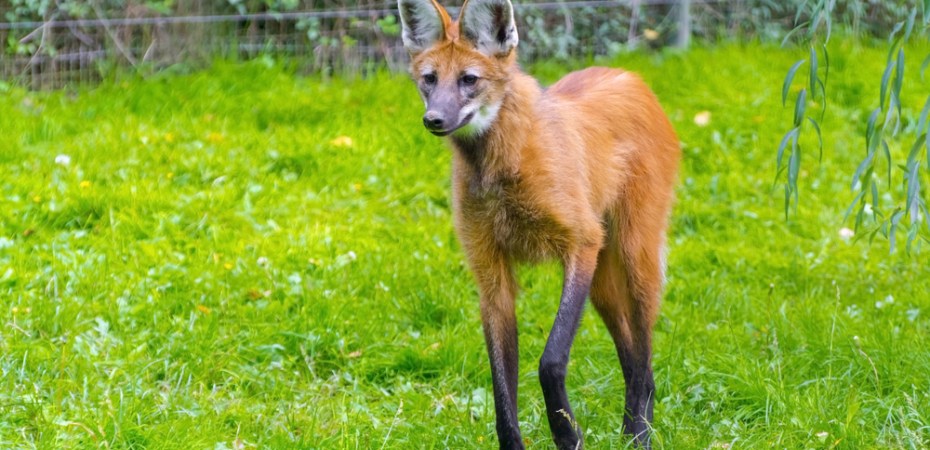
“Zorro” is Spanish for “fox.” (Image: Wikimedia, public domain)
The maned wolf is not closely related to canids found outside South America. It is not a fox, wolf, coyote or jackal, but a distinct canid; though, based only on morphological similarities, it previously had been placed in the Canis and Vulpes genera… Its closest living relative is the bush dog (genus Speothos), and it has a more distant relationship to other South American canines (the short-eared dog, the crab-eating fox, and the zorros or Lycalopex…
This unusual taxonomy and the creature’s red-list status are probably why maned wolves have their own research working group in the Canid Specialist Group.
“Haters gonna hate.” (Image: Animalia, CC BY-SA 3.0)
The convergent evolution of stilt legs in Order Carnivora seems to have happened at around the same time on two different continents: six million years ago in South America for maned wolves and some 5.4 million years ago in Africa for servals. (Thiel)
Now what could have caused both sides of Order Carnivora to evolve features useful for hunting in tall grass at that time?


 Flight To Wonder