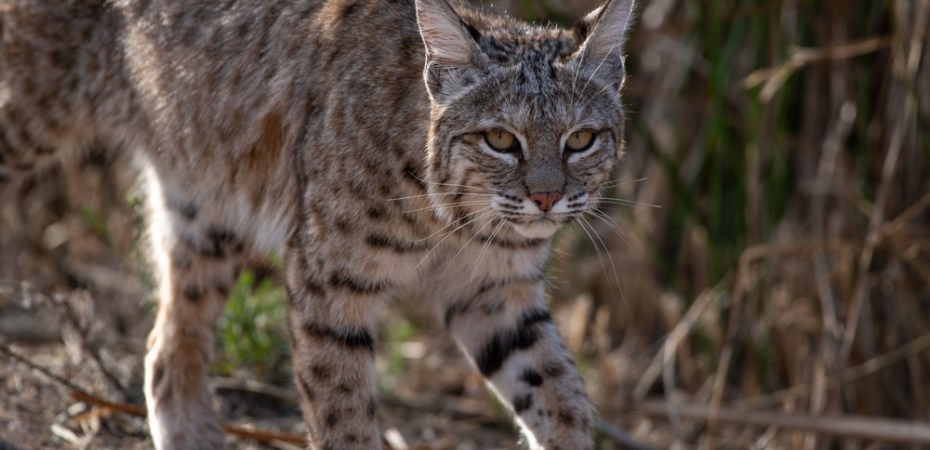
That’s Lynx rufus, the bobcat, and this trail cam video shows North America’s “red lynx” at its wild best:
Bobcats sort of look like Canada lynx, especially in the summer, but their coats usually have redder, shorter fur with noticeable spots; their paws aren’t oversized “snowshoes”; and the bobcat’s short tail is black-tipped on the upper side and white underneath — a Canada lynx’s tail is black-tipped on both sides.
The surroundings can clue you in, too. Bobcats can’t handle much snow, which is why the northern edge of their range doesn’t extend very far above the US/Canada border.
The Rocky Mountain group of Canada lynx will be found at higher elevations than the bobcat for the same reason.
And if it’s in the Southwestern US or Mexico — it’s a bobcat.
Aaaaand — if it’s a moderately large feline in a predicament, high above the ground, it’s probably a bobcat:
Exhibit A:
Exhibit B:
Exhibit C:
It probably isn’t a coincidence that pumas (a/k/a Florida panthers) also roam the lands shown in Exhibits A and B. Life is hard out there, even for a dominant mesocarnivore like the bobcat.
More information:
- Bobcats in Arlington, Texas
- Mongabay on bobcats
- Animal Diversity Web page
Lagniappe:
I grew up with sounds like this in the New England and upstate New York woods — talk about wild best!
Featured image: Griffin Gillespie/Shutterstock
 Flight To Wonder