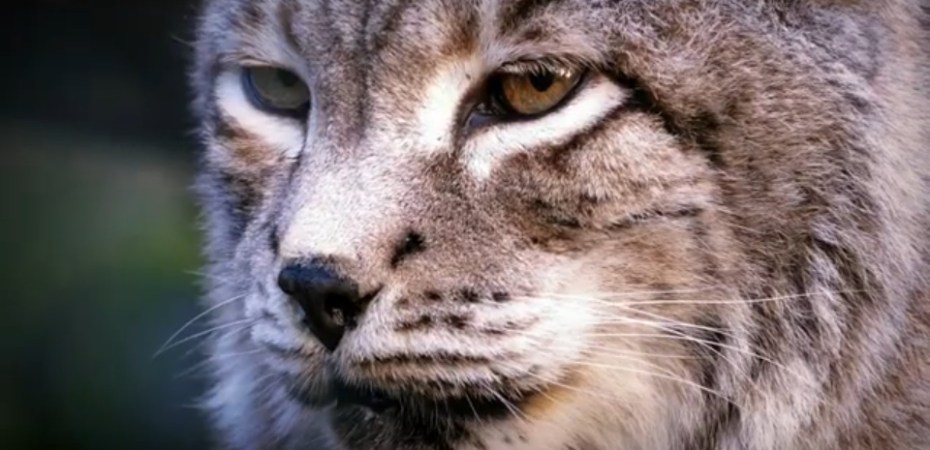
Everyone in this video that was uploaded in 2021 just calls them “lynx,” but this is Lynx canadiensis, the Canada lynx and it never has followed national borders.
It was extirpated in the US but continued on in the wilder parts of the north away from people.
According to the Colorado Virtual Library:
…In 1973, lynx were added to the state’s Endangered Species List. In the mid-1990s, the Colorado Division of Wildlife began planning a major effort to reintroduce the species, which had been almost completely wiped out. For the first release in 1999, forty-one lynx were brought into Colorado from remote areas of Canada and Alaska. Fitted with radio collars, they were released in Colorado’s south-central mountains. Nine of the animals died that first year, mostly from starvation, with two killed by vehicles on I-70. Yet despite these losses, the fact that most of the animals did survive allowed the Division of Wildlife to continue with the reintroduction program. In 1999 and 2000, a total of ninety-six lynx were released. By 2002, about forty-three of these had died, according to an update issued that year…
Several reports and updates on the lynx project were issued in the following years, which can be accessed from the State Publications Library. In 2002, the Division of Wildlife issued a lynx conservation plan. An additional seventy animals were released, their locations shown in a series of maps issued as part of a 2005 report. Also that year, the Division released research on lynx in the area around Wolf Creek Pass. At the ten-year mark in 2009, another update was issued, this time showing that about half of the 218 lynx released up to that time had died. Over a hundred kittens had been born, however, which helped stabilize the numbers. A 2010 fact sheet highlighted the successes of the program: as time went on, survival rates increased and lynx were able to successfully reproduce…
I don’t know whether this US population cycles up and down along with the snowshoe hare, as lynxes do in Canada.
Other causes of mortality include traffic accidents and plague, which is present in the West but easily treated with antibiotics.
Nevertheless, the Colorado lynxes are successfully breeding in some places now, which is very encouraging for their long-term presence here.
Here’s a 2025 update.
This last video is actually from Alberta but it, too, shows that Canada lynxes are just like house cats in some ways:
 Flight To Wonder