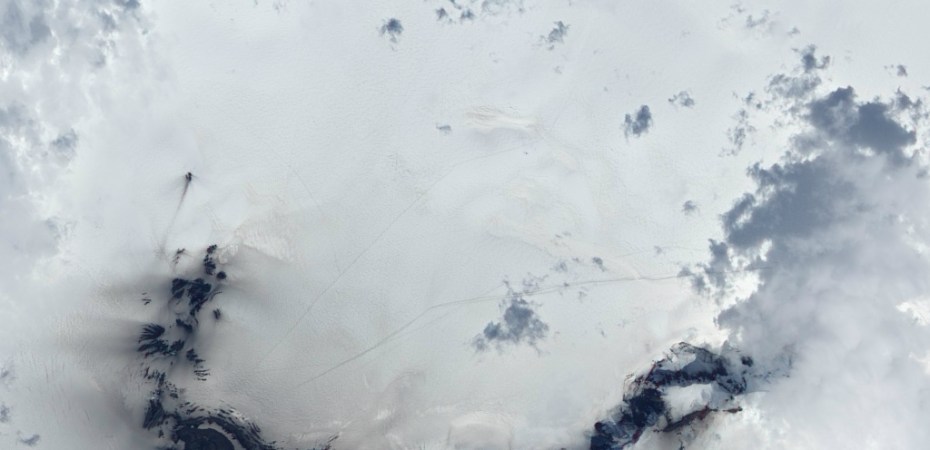
This is more of an update than an introduction.
Ice-capped Grimsvotn in south central Iceland did not erupt after the glacial outburst flood (jokulhlaup) in January 2024 that was noted in the previous blog post, but as the Icelandic Met Office said in their notice about lowering the alert status back to green:
The long-term situation at Grímsvötn is considered to be above background levels. Over monthly scales, seismicity at Grímsvötn remains high. Additionally, surface deformation at Grímsfjall has exceeded the level measured before the last eruption in May 2011. Grímsvötn remains a volcano that IMO monitors closely because of long-term unrest.
While Grimsvotn sleeps now, it’s possible that we will hear from this volcano over the coming year. That’s just layperson speculation, of course, but nearby Bardarbunga is having some strong quakes as it reawakens and, in 1996, activity at Bardarbunga might have triggered Grimsvotn (as Dr. Wikipedia describes it, opinions vary on which volcanic system that event’s source belongs to):
🌋🌋🌋
More information:
Icelandic Met Office
- Front page: Icelandic; English
- Aviation Notices (VONAs)
- Grimsvotn updates (autotranslated)
Updates:
December 3, 2025, 12:01 p.m., Pacific: I’m updating posts and don’t see anything on Grimsvotn since the January glacial outburst flood (jokulhlaup). That is the last GVP notification topic, too.
January 20, 2025, 8:37 p.m., Pacific: IMO has lowered the alert back to Aviation Code Green, noting in today’s update (via Google Translate):
Updated January 20 at 2:50 PM
• Turbulence and water level have reached similar values as before the race
• Maximum flow in Gígjukvísl on Wednesday, January 15th
• No signs of increased seismic activity or volcanic unrest in Grímsvötn
Turbulence measured by the seismometer on Grímsfjall and water levels in Gígjukvísl have returned to similar values as they were before the flood. Thus The Grímsvatn eruption, which began about 10 days ago, has ended. Seismic activity in Grímsvötn did not increase during the eruption, but several earthquakes below M2 were measured last week. Pressure relief due to the glacier eruption did not result in increased activity in Grímsvötn during the eruption. Therefore, the flight color code for Grímsvötn has been lowered back to green, after having been temporarily raised to yellow when the eruption reached its peak.
Although the jökulhlaup has ended, the Icelandic Meteorological Office continues to closely monitor activity in the area.
January 17, 2025, 7:54 p.m., Pacific: Today’s VONA message — if all remains quiet over the weekend, I suspect they will drop the alert on Monday
If…
VONA message
Grímsvötn
Time: 17. Jan 2025, 15:23 GMTColor code: Yellow
Volcano id: 373010
Activity summary:
The tremor associated with the glacial outburst, started at Grímsvötn on 10 January, is slowly declining. Similarly, the water discharge rate in Gígjukvísl river is decreasing. This data indicate that the flood peak has passed, however the monitoring parameters are not yet returned to normal levels. For this reason and for the uncertain evolution over the next few days, the aviation color code is kept at yellow level and it will be reviewed next Monday (20 January).
Cloud height:
No eruption ongoing.
Other cloud information:
No eruption ongoing.
Remarks:
Additional information about Grímsvötn is available here:
January 15, 2025, 6 p.m., Pacific: As far as I know, nothing else has happened regarding Grimsvotn since IMO raised the Aviation Code to Yellow ten hours ago, reporting:
Grímsvötn
Time: 15. Jan 2025, 13:19 GMTColor code: Yellow
Volcano id: 373010
Activity summary:
In the last couple of hours tremor recorded at the seismic station on Grímsfjall has risen sharply. Similar dynamics has been observed during previous glacial floods from Grímsvötn and it is not unusual when a flood is reaching its peak discharge. Currently there are no indications of volcanic tremor or elevated seismicity around Grímsvötn. Knowing that an eruption has been triggered in previous flood events, it is uncertain how this event will develop, and the occurrence of an eruption cannot be excluded. As such, as a precautionary action, the aviation color code is elevated to yellow for the time being.
Cloud height:
No eruption ongoing.
Other cloud information:
No eruption ongoing.
Remarks:
This observed increase in tremor is related to the ongoing glacial flood which started at the end of last week. It is likely reflecting an increase in the geothermal activity due to the depressurization of the system when a significant water volume is drained from the lake. IMO continues monitoring the area closely.
January 13, 2025, 5:35 p.m., Pacific: A jokulhlaup has begun at Grimsvotn and is expected to peak later this week.
In their report, IMO says that they don’t expect damage to infrastrucure. In terms of eruption potential, they haven’t raised the alert level yet but note:
…Seismic activity in Grímsvötn in recent months has been within normal limits. However, during the jökulhlaup, it is likely that seismic activity will increase in connection with it. The 24-hour watch of the Icelandic Meteorological Office together with experts from the Institute of Earth Sciences will closely monitor activity in Grímsvötn over the next few days and the news will be updated again later in the week, while the geologist’s commentary will be updated daily.
Due to uncertainty about the development of the event and the relationship between glacial outburst floods and volcanic eruptions in Grímsvötn, the Icelandic Meteorological Office will reassess the flight color codes for Grímsvötn around the peak of the outburst or if conditions change…
Featured image: NASA Earth, public domain
 Flight To Wonder