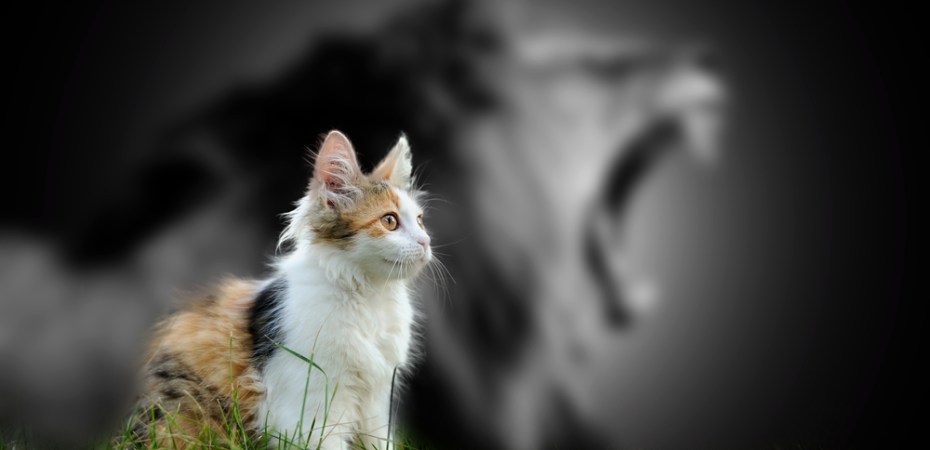
There are oodles of blog posts here already about cats and how they evolved, so I am just going to briefly cover the feline lineages that we share the planet with today, oldest to youngest (estimated ages per Werdelin et al.)
First, an overview (note: the number of cat species actually varies from expert to expert, and it can change as new insights and discoveries are made):
Next, just a few highlights from each lineage.
🐈🐈🐈
Panthera
The boffins estimate this group, a/k/a the subfamily Pantherinae and composed of the five big cats — lions, leopards, tigers, snow leopards, and jaguars — and the clouded leopard, is about 10.8 million years old.
Is there room for big cats in India, the world’s most populous country?
Yes, but coexistence can be challenging for both pantherine and human:
Meanwhile, on Borneo…photographers seek the elusive pantherine thought by some experts to be a link between big cats and the rest of today’s cat family:
That’s only a brief appearance so here is one of my favorite videos, showing how agile these beautiful clouded leopards are in trees:
Bay cat lineage
Clouded leopards inhabit parts of the Asian mainland, too, but the namesake of this roughly 9.4-million-year-old lineage can only be found on Borneo.
It is extremely shy, too, but persistent wildlife experts have managed to get some images, including these stills which were uploaded eleven years ago —
— and even some video!
Another member of the lineage — the Asiatic golden cat — closely resembles its bay cat cousin (except in the northern part of its range, where it has an ocelot-style spotted coat).
The following video shows close-ups of its beautiful facial fur patterns:
Caracal
We must go to Africa to meet the third oldest lineage (about 8.5 million years old).
It has a golden cat, too — unrelated to Asia’s and seldom seen except when it plops down in front of a trail camera while taking a break:
🐈🐈🐈
There is also a pouncer —
— and a schmoozer:
Hermes was a little too comfortable in the human environment, unfortunately, and reportedly died in a 2023 traffic accident. Here is his obituary.
Now it’s time to head to the Americas…
Ocelot
The namesake of this 8-million-year-old lineage is fairly common in Central and parts of South America but so rare north of the Rio Grande that they made a film about it.
Here’s the trailer:
Most of Latin America’s many small cats are in this lineage.
The most iconic — because of its rarity as well as its setting — is the gato andino.
It sometimes has English subtitles —
— although there are stories that need no words at all:
Lynx
Lynxes have been around for 7.2 million years and today they span the northern continents of Eurasia —
— and North America (which geologically includes Mexico).
The bobcat ranges from Mexico up to approximately the US/Canada border, where the Canadian lynx takes over.
I don’t know where this encounter occurred, but it was probably a very young adult bobcat:
Live and learn!
Puma
Puma, cougar, mountain lion — call it what you will, but the namesake of this roughly 6.7-million-year-old lineage ranges from the tip of South America up into the Yukon and has what one YouTube commenter calls the most aggressive meow ever heard:
They purr, too.
That’s a little subjective, but no one argues about the world record owned by another cat sitting on this particular branch of the cat family tree: fastest land mammal!
🐈🐈🐈
Whew! Time to stop for a drink at the local waterhole:
Hear the alarm calls? The oryx herd usually crowds around this waterhole in the Namib Desert, but not now. Even though they are larger than the cat, outnumber it, and have very sharp horns and hooves, they know Death when they see it and give it a wide berth.
Leopard cat
As you can see, we’re a long way down the tree from Panthera, but the small Asian cat that’s the lineage’s namesake has plenty of spots.
And we’re about due for some squee, so —
There are a number of other small cats in this lineage. The best known species has also been a very challenging taxonomic problem, though most of us know and love the Pallas cat for its seemingly deranged look.
But Manul can be very, very mellow:
Domestic cat
Yes! Fluffy’s lineage is also the youngest one in family Felidae, branching off from the leopard cat et al. about 6.2 million years ago.
All these little Felis species were wild — and also wildcats — until the last ice age ended, which is when some African wildcats got nosing around the rodent-infested grain stores of the first farmers and eventually came in from the cold.
😺😻😸
Featured image: Volodymyr Burdiak/Shutterstock
Source:
Werdelin, L.; Yamaguchi, N.; Johnson, W. E.; and O’Brien, S. J. 2010. Phylogeny and evolution of cats (Felidae), in Biology and Conservation of Wild Felids, 59-82.
 Flight To Wonder