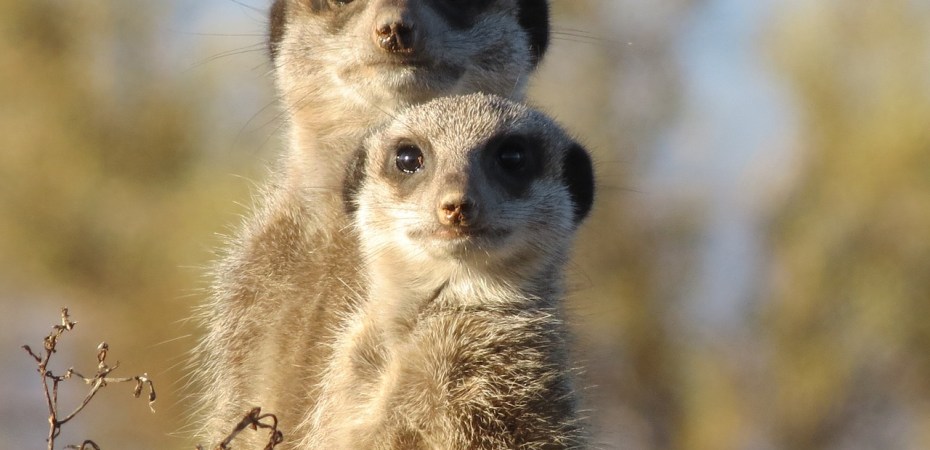
What an awful scientific family name for cute little meerkats!
“Nope.” “We are not amused.” “Uh-uh.” (Image: Brookfield Zoo)
To soften the blow a little bit, they do belong to the Mungotinae subfamily — another cute name and also one that contains a clue about the identity of the meerkat’s many close relatives (which are not cats).
See, if we add a few letters to “Mungo”…
Wait.
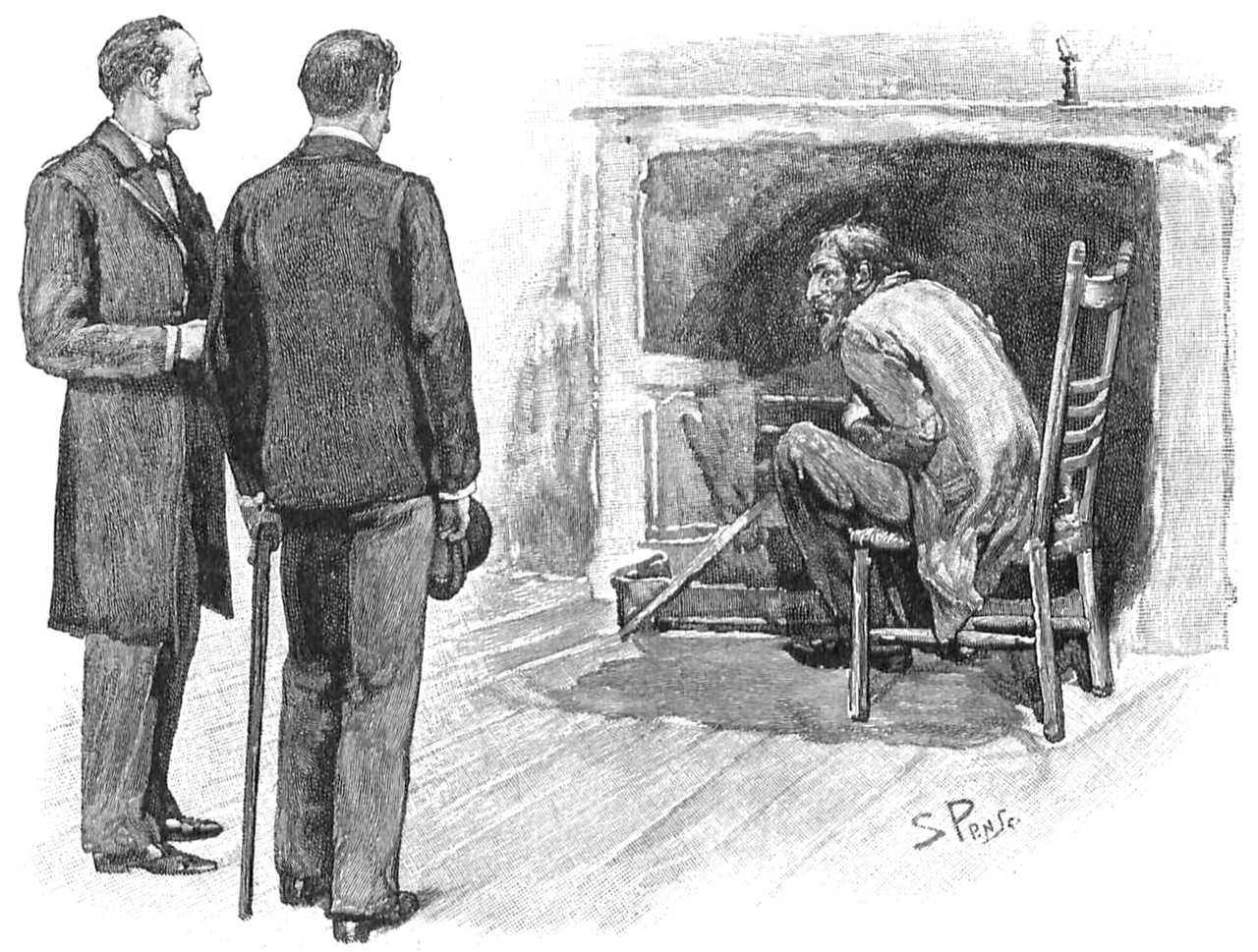
Speaking of clues, Arthur Conan Doyle described a general specimen of these delightful meerkat relatives very vividly in a Sherlock Holmes story — let us observe the Clue Master at work:
…it was not the man who surprised me. It was his companion.”
“His companion!”
Holmes pulled a large sheet of tissue paper out of his pocket and carefully unfolded it upon his knee.
The paper was covered with tracings of the footmarks of some small animal. It had five well-marked footpads, an indication of long nails, and the whole print might be nearly as large as a dessert spoon.
“It’s a dog,” said I.
“Did you ever hear of a dog running up a curtain? I found distinct traces that this creature had done so.”
“A monkey, then?”
“But it is not the print of a monkey.”
“What can it be, then?”
“Neither dog, nor cat, nor monkey, nor any creature that we are familiar with. I have tried to reconstruct it from the measurements. Here are four prints where the beast has been standing motionless. You see that it is no less than fifteen inches from fore foot to hind. Add to that the length of neck and head, and you get a creature not much less than two feet long — probably more if there is any tail. But now observe this other measurement. The animal has been moving, and we have the length of its stride. In each case it is only about three inches. You have an indication, you see, of a long body with very short legs attached to it. It has not been considerate enough to leave any of its hair behind it. But its general shape must be what I have indicated, and it can run up a curtain and is carnivorous.”
“How do you deduce that?”
“Because it ran up the curtain. A canary’s cage was hanging in the window, and its aim seems to have been to get at the bird.”
“Then what was the beast?”
“Ah, if I could give it a name it might go a long way towards solving the case. On the whole it was probably some creature of the weasel or stoat tribe — and yet it is larger than any of these that I have seen.”
The man leaned over and pulled up the front of a kind of hutch in the corner. In an instant out there slipped a beautiful reddish-brown creature, thin, and lithe, with the legs of a stoat, a long thin nose, and a pair of the finest red eyes that ever I saw in an animal’s head.
“It’s a mongoose!” I cried.
“Well, some call them that, and some call them ichneumon,” said the man. “Snake-catcher is what I call them, and Teddy is amazing quick on cobras. I have one here without the fangs, and Teddy catches it every night to please the folk in the canteen. Any other point, sir?”
There was no particular reason for either Holmes or Watson to bring cheetahs into it, but more than a century later the BBC did raise this point: mongooses taste revolting —
Both meerkats and this particular species, perhaps the banded mongoose, are among those in Mungotinae — the social side of family Herpestidae (a name perhaps derived from ancient Greek words for serpents?)
Dr. Wikipedia tells us that there are mongooses who instead prefer a solitary lifestyle:
The mongoose family branched off from family Felidae some 21 to 22 million years ago, according to Hassanin et al, and today it includes not only meerkats but also more than thirty other species.
You might already be aware of online videos and informative resources about meerkats. This post will help start you off on further explorations of other members of this huge family that has an awful name but is composed of many wonderful little feliforms!
As for the meerkats themselves, there are zillions of cuteness videos — more unexpected is to find them on Nat Geo Wild “World’s Deadliest”!
🐾🐾🐾
Finally, here is a feature-length video of the meerkat’s arid habitat and the other animals who share it with them.


 Flight To Wonder