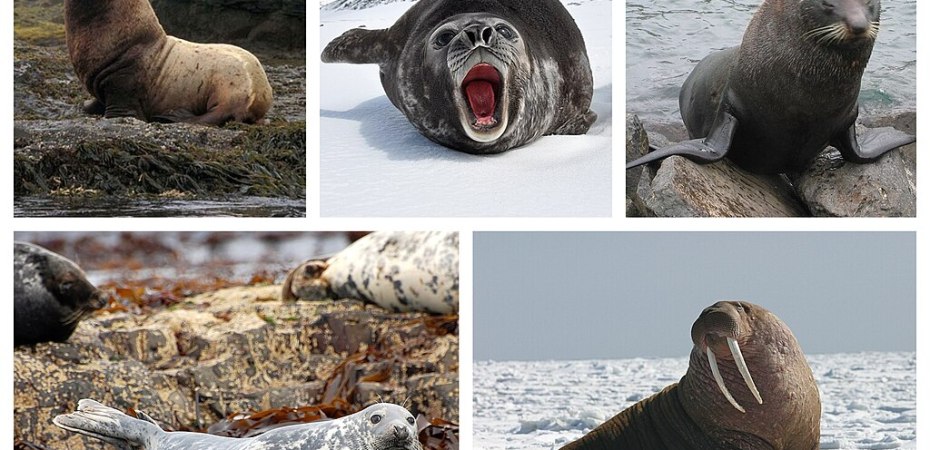
Okay, who left the Club Caniform door open? Fish-eaters are trying to get in!
Actual comment: “Hello, land dog. I am sea dog.”
Wait.
They have Carnivora credentials, and they sure aren’t feliforms.
Okay — waddle on in, fin-foots, get comfortable, have a shrimp cocktail or two, and tell us a little about yourselves!
Odobenidae
We understand, Walrus — you never met that carpenter or so nastily betrayed those young oysters.
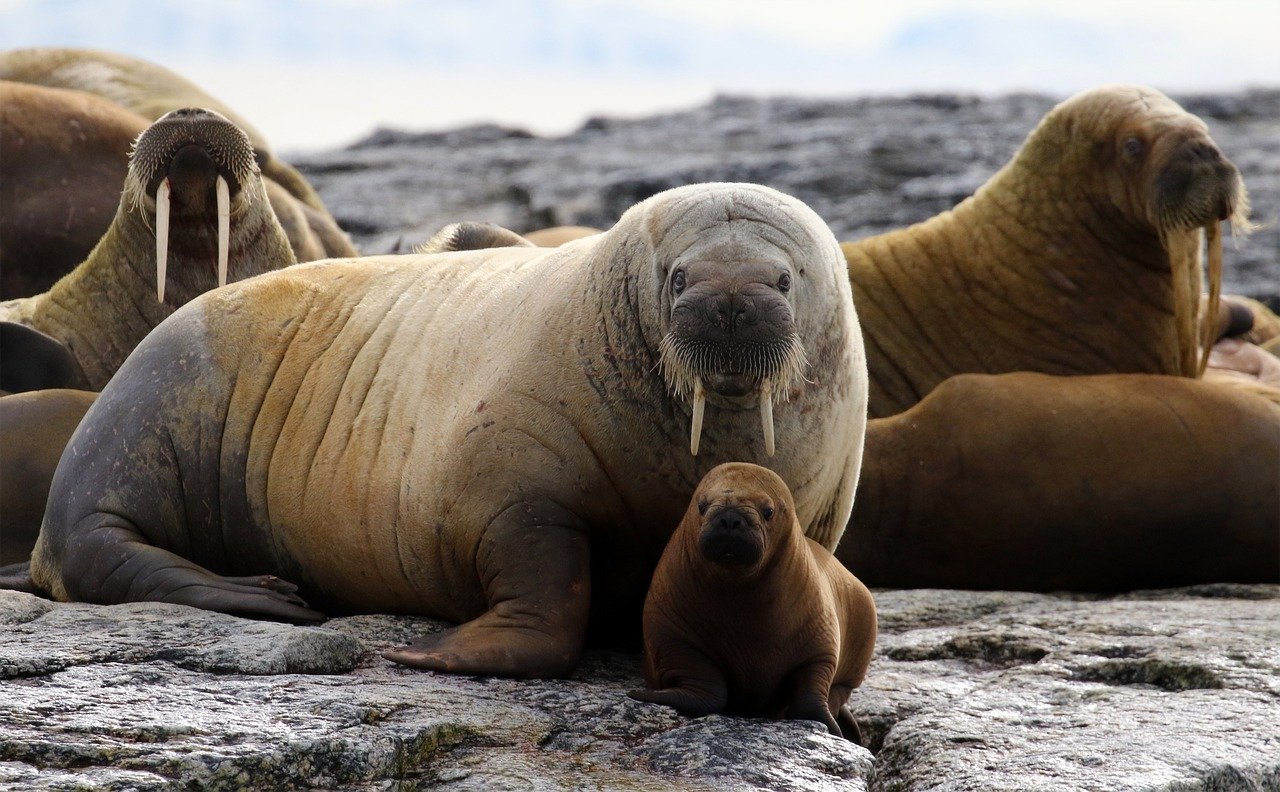
Image by Monica Max West from Pixabay)
Dr. Wikipedia says that “…Adult walrus are characterised by prominent tusks and whiskers, and considerable bulk: adult males in the Pacific can weigh more than 2,000 kilograms (4,400 pounds).”
How do you get that big?
It’s not, uh, oysters. Is it?
Gasp!
More information:
- WWF Arctic page (includes link to Walrus From Space citizen science project).
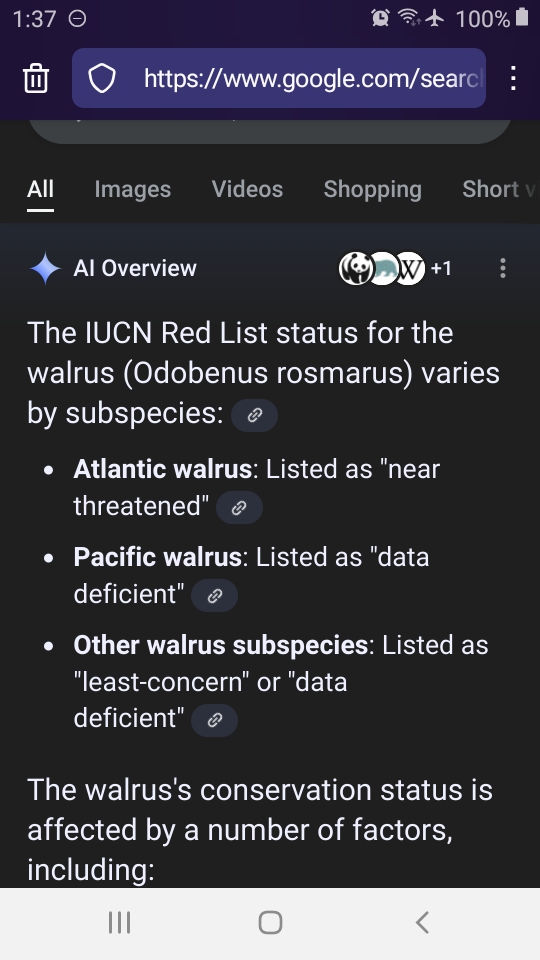
- IUCN Red List Status: This is difficult to track down. Per AI Google results for this search on October 19, 2024:
- Alaska orphan walrus rescue, July 2024.
How she’s doing now:
Otariidae and Phocidae
Seals, basically — with and without obvious external ears.
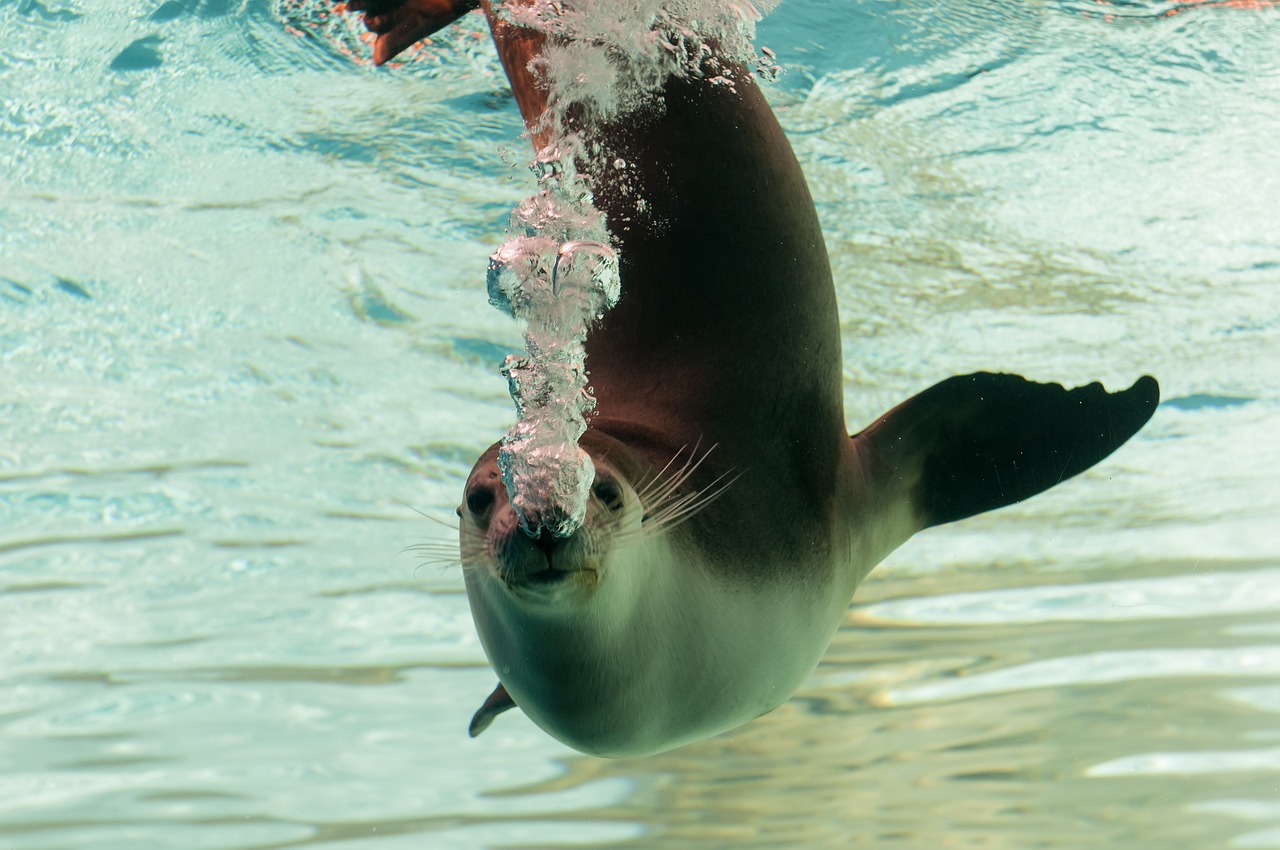
Image by Angelo Giordano from Pixabay)
I am learning about this for the first time while doing this post, so there will be links and videos but not a lot of commentary.
There are sea lions/fur seals (with obvious ears, Otariidae) and true seals (without any external sign of ears, Phocidae).
Here are some suggestions for telling them apart.
There is much taxonomic diversity here, so let’s just meet some seals and link to a few detailed information sources:
More information:
- Sea lions
These are the performers you see in shows. They are trainable and can get around on land more easily than true seals.
Sea lions are hardy, judging by Wikipedia — they range from subpolar to tropical waters (except the North Atlantic, for some reason).
Their IUCN Red List status is varied. According to the AI generated by this search on October 20, 2024:

- Fur seals,
south and north.I think these were the ones that were hunted for sealskin during the bad old days.
They get around on land as well as sea lions — not surprising since Dr. Wikipedia notes that:
…Eight species belong to the genus Arctocephalus and are found primarily in the Southern Hemisphere, while a ninth species also sometimes called fur seal, the Northern fur seal (Callorhinus ursinus), belongs to a different genus and inhabits the North Pacific. The fur seals in Arctocephalus are more closely related to sea lions than they are to the Northern fur seal, but all three groups are more closely related to one another than they are to true seals.
- True seals (Phocidae): Animal Diversity Web page.
These are global ocean travelers, too, but tend to stay out of tropical waters, per Wikipedia.
There are so many species!
Here are some examples:
🐟🐟🐟
🐟🐟🐟
And then there’s that one fresh-water seal and its landlocked relative:
The conservation status of seals, again, is difficult to discover. Per this search on October 20th:

I also discovered, while researching this, that if you let your dog bark at a Hawaiian monk seal on the beach, you will be arrested, fined, and probably receive social-media death threats!
As for the Mediterranean monk seal, there is good news —
Some lagniappe:
You might have seen it already, but this encounter between two caniforms is so cute!
Featured image LittleJerry via Wikimedia, public domain.
 Flight To Wonder