
Kelimutu, on Flores Island in Indonesia, has three crater lakes that slowly, majestically change color every now and then, hence NASA’s “mood ring” reference.
Here is Kelimutu’s summit in 2022:
Curious about that chocolate-brown color? One of the lakes displays it in this 2018 video:
It’s difficult to find reliable images of the “red” variation — let alone video! — but it is included on this 1992 Indonesian bank note:
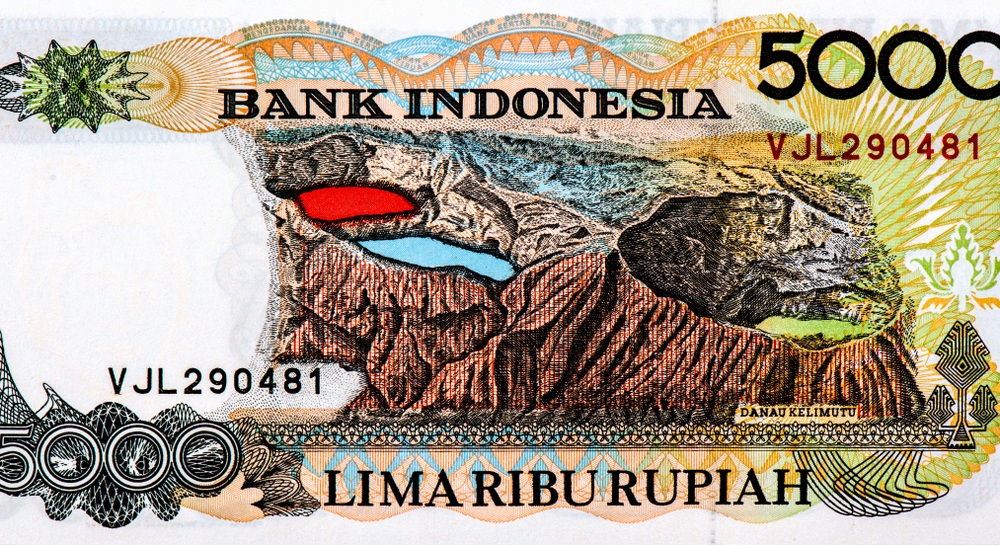
Prachaya Roekdeethaweesab/Shutterstock
Status
Before we get to the obvious question, it’s important to note that the temperature of the lakes began to increase recently, with other changes, and there might be an ongoing magma intrusion.
Here’s the current Global Volcanism Program update:
PVMBG reported temperature increases at all three of Kelimutu’s crater lakes and water-color changes at two of them based on 14 and 28 July field observations and webcam images. The variations were most significant at Crater I (Tiwu Ata Polo). The color of the water changed from brown on 14 July to blackish brown on 28 July and the temperature increased from 19 to 22 degrees Celsius. Water bubbles and/or upwelling in the NE part of the lake were observed on both days. At Crater II (Tiwu Koofai Nuwamuri) the water color was turquois green on 14 July. Light-yellow to golden-yellow sulfur deposits were floating on the water in the central part on the lake and along the S edge of the water on 14 July. There was a minor sulfur odor and the water temperature was 25 degrees Celsius. By 28 July the water color had changed to light blue and light-yellow sulfur deposits were scattered on the surface in the central part of the lake and along the margins. A sulfur odor was present and gas plumes rose as high as 100 m above the water’s surface. The water temperature had increased to 33 degrees Celsius. The color of the lake water at Crater III (Tiwu Ata Bupu) remained at dark green during 14-28 July, but the temperature increased from 16 to 19 degrees Celsius. Though the activity indicated increased activity within the hydrothermal system, the Alert Level remained at 2 (on a scale of 1-4) and the public was warned to stay 250 m from the crater rims.
That’s from July and the alert continues at the time of writing, according to my MAGMA ID app.
Why the color change?
I don’t know. It gets complex very quickly, but here are some good places to begin your own investigation:
- Volcano Cafe has a very detailed page that delves into the color change among other things.
- Wikipedia calls the science “relatively easy to follow.”
- According to Anna Todd, “People believe that particular minerals in the water may interact with volcanic gas to create the mercurial shades, but it’s hard to know for sure.”
Lagniappe:
Travel destination video time!
Flores is small and remote but apparently there is much to see and do there; it’s also where you catch the boat to the dragon island (they come in at about 2:39 in this video) —
— just be aware of the status of this island’s many active volcanoes when planning a visit, okay?
Featured image: Agnes Vilaseca/Shutterstock
 Flight To Wonder