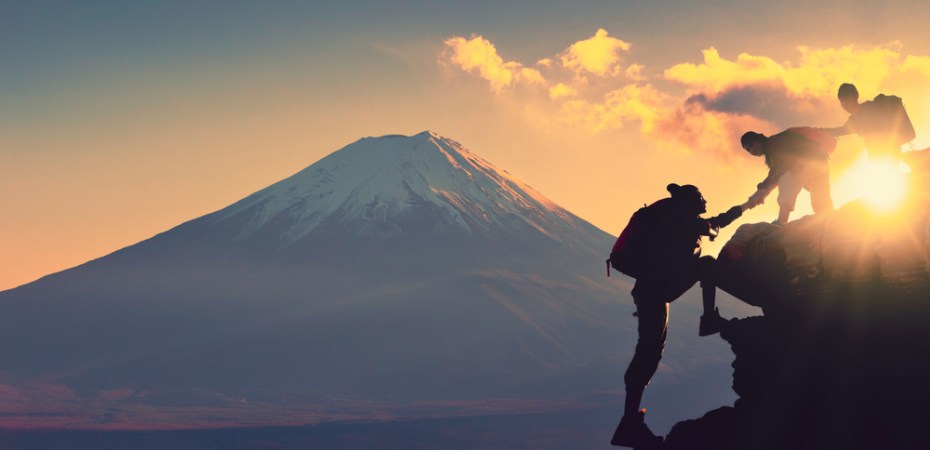
A volcano book, right? And with that picture, today’s Sunday Morning Volcano must be Fuji.
No?
Definitely not — in fact, we lose Fujisan in this translation of a Japanese bestseller, big time.
We lose Japan, too. It sinks.
That sounds ridiculous, but it doesn’t read that way. And, with a little push from some unrelated tweets about volcanoes and Japan’s M7.1 last Thursday, and the subsequent megathrust quake risk alert, Japan Sinks inspired me to think up this Sunday Morning Post.
It will bring in both Fuji and Kirishima.
But first —
The book
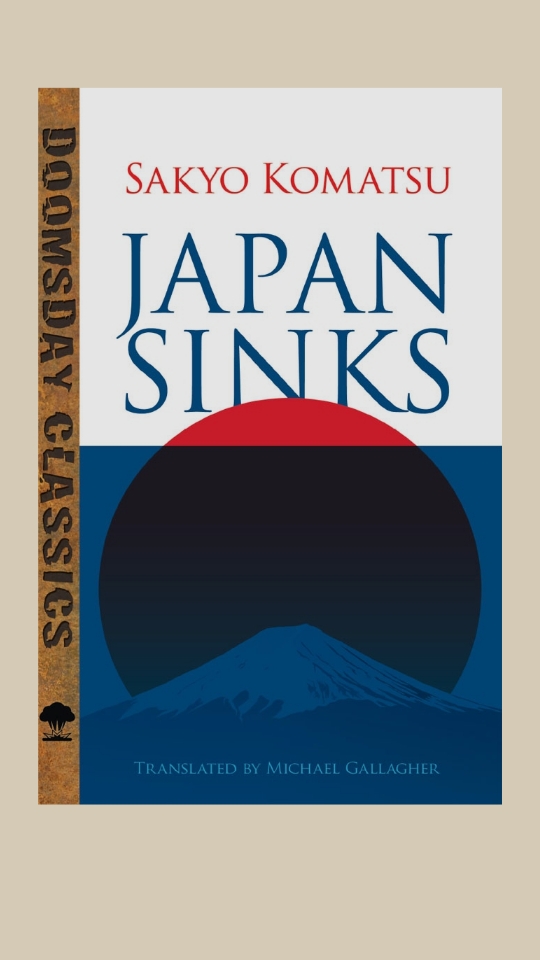
This is one of those science fiction stories that are really about the human condition, though it’s also a very good disaster tale. It grabs you even at second-hand through Michael Gallagher’s less than 300-page 1976 condensation of Sakyo Komatsu’s original two-volume work, published three years earlier.
The Seventies setting doesn’t matter. Mr. Komatsu wrote such believable characters that outsiders can get into them, seeing Japan through their eyes (a little) — then he put those characters through hellish but timeless experiences.
And then he sinks Japan. We get to experience it both at ground level and from a satellite.
I know there are at least two cheesy movies as well as a popular 2020 anime based on it, but seriously — do yourself a favor and read the book.
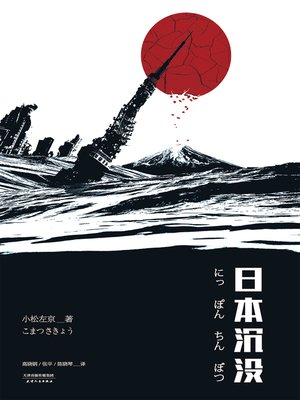
This might be a cover for the original book. (Source)
As for science, Komatsu did such careful research that some people consider its treatment of plate tectonics — as understood in the late 1960s, anyway — to be at the level of a master’s thesis, according to Japanese Wikipedia (autotranslated).
It’s entertaining, too.
For instance, his description of a mini-sub dive into the Japan Trench is almost like going along for the ride (and just as scary, too!).
Of course, Japan will not sink in real life due to the complex tectonics causing the earthquakes and volcanoes that, along with the book, made me decide to do this post today.
Kirishima
My path to Japan Sinks began while I was following tweets Thursday, in Japanese, about the Nankai Trough quake risk alert on Thursday.
These were made by knowledgeable people I first discovered by their tweets after the Noto earthquakes at the beginning of this year.
A tweet Thursday mentioned volcanoes, and there was a brief, joking exchange in the replies along the lines of “well, it did happen in the same location and he did mention Kirishima erupting,” and a mysterious (to me) reference to what the X translation called “death city Japan.”
It’s hard to follow along with translations, and my main interest that day was earthquakes, so I just let it go.
A day later, I was contemplating Sunday Morning Volcano topics and realized that the Kirishima reference might lead to a good post on how big earthquakes affect volcanoes.
I couldn’t find the tweet again so I searched for “dead, city, Japan” and eventually found Japan Sinks (and yes, I did read it all at once last night — it’s that good).
Today, I found what the tweeters were probably referencing: Death City Japan (autotranslated).
It probably didn’t come up in my search because of language differences, whereas Mr. Komatsu’s book has been translated and is well known in the West.
Per the Wikipedia synopsis, a 7-pointer quake does happen in about the same location as Thursday’s 7-pointer, setting off the Kirishima volcanic complex on the northern side of Kagoshima Bay. The eruption intensifies, in fiction, into a caldera eruption.
In real life the August 8th temblor did cause damage and some injuries in Kagoshima Prefecture but no uptick in volcanism there, as far as I know.
The discussion was about subtle seismogram readings at Kirishima — over my head — and was inconclusive, as far as I could tell.
And anyway, Shinmoedake at Kirishima is already one of Japan’s most active volcanoes, with lots of seismicity.
More information:
- A paper on Kirishima and its 2011 explosive eruption.
- Active Volcanoes of Japan page.
- August 11th update (autotranslated) for Mount Kirishima.
- Wikipedia: Shinmoedake.
Mount Fuji
Last fall, in a post about its hazards, we saw that the 2011 megathrust quake apparently did affect faulting near Fujisan.
Now magma is moving a little bit at depth. Mount Fuji is waking up.
The volcano’s status is still at normal background levels, but they have updated plans and continue to monitor it closely.
Could a Nankai Trough megathrust earthquake set off Mount Fuji?
Let’s just say that its last eruption occurred less than two months after the 1707 megaquake.
This was the only historical time that all segments in this fault have given way at once.
Mount Fuji had a VEI 5 eruption and then went silent, sitting out Nankai megaquakes in the 1850s and 1940s.
If and when Fujisan does light up, it will not be good news for Tokyo.
So here we are, admiring Fujisan and other Japanese volcanoes but feeling a little wary of them at the same time.
And the minutes are passing slowly for the Japanese during this week of enhanced concern, recommended by JMA, regarding chances for a megaquake.
Sakyo Komatsu, via Michael Gallagher, described the aftermath of one of his earthquakes in Japan Sinks this way:
…All order had been obliterated, leaving nothing behind but a shambles. The thing that ever lurked behind the geometric patterns of rational order had shown its terrible visage.
The more comfortable we are in our technological 21st-century cocoons, the more terror we feel about that Thing.
We forget that we have grown up with it. We have been shaped in painful ways, at times by awful experiences, but this also has matured and strengthened us.
We would not be so comfortable today without the trials others have undergone in the past.
Should we fear our own testing or should we prepare to meet it as best we can, however it comes?
Probably a little of both.
We are a part of Nature, and Nature treats us horribly now and then.
But Nature has never extinguished us, and we have always come back stronger.
We will again, too, whenever the Thing next comes our way.
Featured image: CrispyPork/Shutterstock
 Flight To Wonder