On March 20, 2010, the Icelandic volcano Eyjafjallajokull erupted through fissures in the Fimmvorduhals pass between two glaciers.
It was a gorgeous “red-lava” (effusive) eruption that attracted many visitors despite the remote location and rugged terrain:
Including lavafalls on high, snow-covered cliffs.
The show lasted until mid-April and then quieted down, but Eyjafjallajokull wasn’t done yet.
Two days later, it opened up again, this time underneath the glacier that partly covers the volcano.
The lava coming out of those subglacial vents was the same mafic material as before, but that combination of molten rock and water was explosive:
Such phreatomagmatic eruptions are one of the ways that volcanoes can explode.
Sometimes, though, a fire mountain just goes off, without any obvious interaction with water or ice.
What’s happening there?
As this layperson understands it, these explosive “gray-lava” eruptions are gas powered and they involve the more sticky kind of felsic magma that’s usually found in subduction zones.
Iceland is an interesting (and not fully understood) combination of spreading ridge and hotspot melting anomaly. There, mafic magma like Eyjafjallajokull’s is runny enough to release its dissolved gases before and during the initial stages of an eruption.
Felsic magma holds those gases in as it rises up a volcano’s conduit until they can no longer be contained and — BOOM!
This jargon-free video gets into the chemistry of that and also explains why the explosive volcanism happens at subduction zones:
Aha! Water was involved — just not in the way we expected!
More information:
- What is lava made of? (link)
- How to classify igneous rocks (link)
- Discover: Five of the most explosive eruptions
- New Zealand Civil Defence: What to do during a volcanic eruption (link)
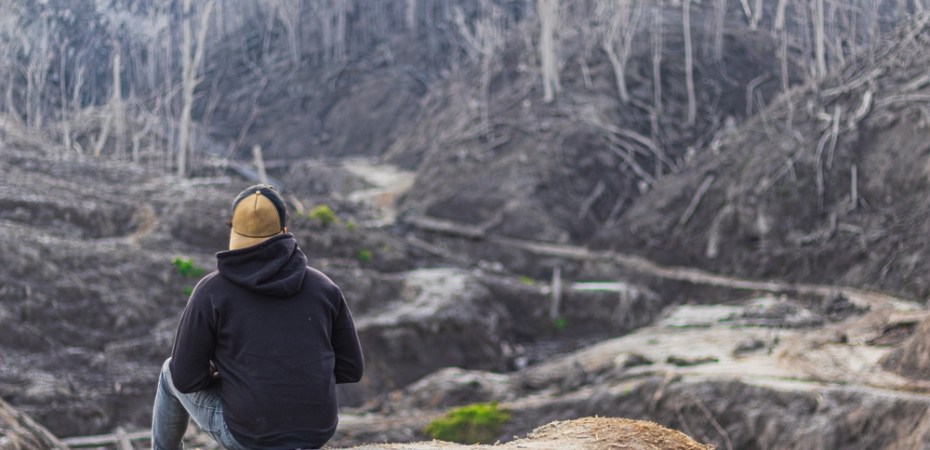
Featured image: Someone contemplating the aftermath of an eruption at Turrialba, image by Leo Tenorio/Shutterstock.
 Flight To Wonder