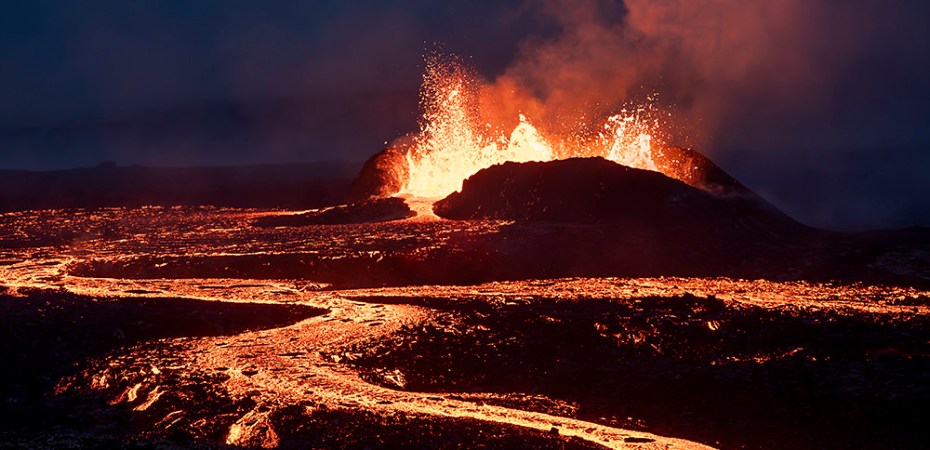
Sometimes Iceland’s red-lava (effusive) eruptions start quietly —
Litli-Hrutur, Fagradalsfjall area, Iceland, July 10, 2023.
Sometimes their beginnings are more energetic —
December 18, 2023, Sundhnuks craters area north of Grindavik — not tourist friendly both because of the powerful fountaining and because of the hazard of eruptive fissures unexpectedly opening up (to the right, southward, in this video).
My reading tells me that lava fountains happen when foamy magma breaks through the ground.
But where do the gassy foam bubbles come from?
To answer that, let’s take a short side trip to Mexico for a look at the geochemistry without any chemistry details:
Now back to Iceland, where a volcanologist, Dr. Agust Gudmundsson, tells us how that magma reached the surface in the first place.
The video is jargon-free, short, but more detailed than the Paricutin cartoon up above. Not to worry — this experienced teacher sticks to the basics, uses plenty of graphics, and even brings in fossil volcanoes!
If you have been following the eruptions near Grindavik and Svartsengi, this video brings to life all the terms, like “dike” and “sill,” that the Icelandic Met Office uses in its updates.
Okay, but what about gray-lava (explosive) eruptions?
We’ll find out more about that next week…
Featured image: Roman Popelar, CC BY-NC-SA 2.0
 Flight To Wonder