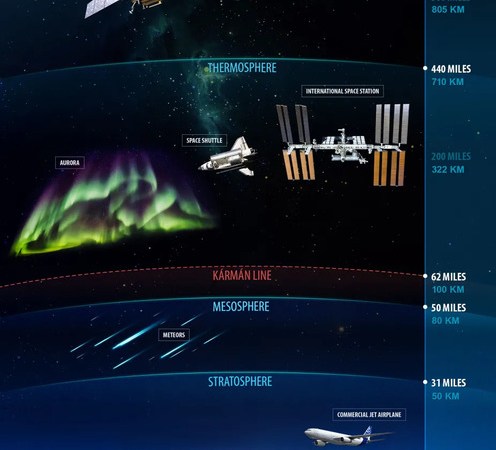
These are some pretty videos for a Sunday morning, but there is also a timely volcano connection: the American Geophysical Union holds a workshop this December on the climate effects of last year’s Hunga Tonga blast, which Millan et al. suggest increased the upper stratosphere’s water content by ten percent.
That’s huge as well as sudden for a natural process, and unexpected for H. sapiens to observe.
From the few papers I’ve read and understood, there hadn’t been much attention focused on that upper stratosphere layer until it was penetrated (and surpassed) by a seafloor cannon shot in January 2022.
So no one really knows what to expect in terms of climate effects.
Given how weather is making headlines lately, a few people are already curious about this.
The natural world is complex and while our climate models are a feat of ingenuity there is always the possibility of unexpected behaviour. This year may (we don’t know yet) be anomalous due to the Honga Tonga eruption and its huge injection of H2O into the stratosphere. https://t.co/FdhBbwJZQP
— Mike Burton (@MikeBurton_Volc) July 21, 2023
https://platform.twitter.com/widgets.js
You might have heard that volcanoes can temporarily change weather and climate when a large explosive eruption injects sulfur material into “the stratosphere.”
I used to think that was all there was to it, but it turns out that the stratosphere is a complex place. It has layers, per UCAR; jets fly in the lowest layer, and I think this and the middle layer are where volcanic sulfates end up.
On January 15th, 2022, Hunga Tonga blew through that to reach the mesosphere, 36 miles (58 km) up!
We don’t need to get too sciencey on a Sunday morning volcano post, but I’d like to get it straight in my own head which part of the air above me is the one that volcanoes typically mess with in terms of sulfur and which part young SuperBloop was able to reach.
Today, let’s just look at the stratosphere. It’s gorgeous.
There are two ways to get there (okay, three, if you count taking a long-distance jet ride, or four, if you’re an astronaut).
But the ways I mean are:
1. Slowly:
Pack some Dramamine for when the low atmospheric pressure pops the balloon near the end and the camera gets rocking! (The whole flight video is almost three hours long.)
That was uploaded six years ago, and there’s no accompanying data. With help from Wikipedia, I’m guessing that their balloon popped somewhere between 11 and 23 miles above Earth’s surface.
The upper stratosphere continues upwards another eight to ten miles after that.
The other way to reach those heights:
2. Fast:
Don’t try it — it’s awfully rough on the neighbors, and perhaps on the planet, too, but we’ll see what the boffins say in December.
For next time, I’m going to look for some videos about what caused this blast.
Lagniappe:
…Coming down:
1. In a movie aircraft:
2. By jumping (IRL):
He was up a little higher than the maximum altitude that ordinary weather balloon/camera probably reached — about 24 miles back down to Earth, once he jumped. The upper stratosphere extends to 31 miles.
Two years later, Alan Eustace “jumped” from the mesosphere: 41 miles up, just five miles higher than Hunga Tonga would reach out and touch naturally in 2022.
Featured image: NOAA via UCAR
Sources:
- AGU 2023 website help page.
- Millan, L.; Santee, M. L.; Lambert, A.; Livesey, N. J.; and others. 2022. The Hunga Tonga‐Hunga Ha’apai hydration of the stratosphere. Geophysical Research Letters, 49(13): e2022GL099381.
- SPARC HTHH impacts open science May 2023 workshop page.
- Taha, G.; Loughman, R.; Colarco; P. R.; and others. Zhu, T. 2022. Tracking the 2022 Hunga Tonga‐Hunga Ha’apai aerosol cloud in the upper and middle stratosphere using space‐based observations. Geophysical Research Letters, 49(19): e2022GL100091.
- Zhu, Y.; Bardeen, C. G.; Tilmes, S.; Mills, M. J.; and others 2022. Perturbations in stratospheric aerosol evolution due to the water-rich plume of the 2022 Hunga-Tonga eruption. Communications Earth & Environment, 3(1): 248.
 Flight To Wonder