- PHIVOLCS bulletin
- Tokyo VAAC
- Global Volcanism Program (GVP} page
- Wikipedia
- Relief Web page
January 8, 2026, 2:29 a.m., Pacific: No updates, just a good view of a pyroclastic density current:
Per headline news, PHIVOLCS says they might raise the alert to 4, which would mean more widespread evacuations, but right now it is still at 3.
January 6, 2026, 6:38 p.m., Pacific: Mayon reportedly is now at Level 3, and some mandatory evacuations are in effect.
January 1, 2026, 9:20 a.m., Pacific: PHIVOLCS has raised the alert level to 2, based on increased frequency of rockfalls. Per GMA:
…In a bulletin issued at 6 a.m., PHIVOLCS said raising the alert level from 1 (low-level unrest) to 2 (increasing/moderate level of unrest) means that there is current unrest driven by shallow magmatic processes that could lead to hazardous magmatic eruption…
December 11, 2025, 8:27 a.m., Pacific: Mayon has had some serious bouts of activity since my last update. See the GVP page for details.
According to their most recent report:
Most Recent Weekly Report: 3 December-9 December 2025
The Philippine Institute of Volcanology and Seismology (PHIVOLCS) reported increased seismic activity at Mayon and new lava at the summit in December. Photos of the summit dome on 8 and 10 December revealed that dark lava spines had been recently extruded. The seismic network detected an increase in rockfalls from an average of three events per day in 2025 to an average of 16 events per day in December, coincident with the extrusion. The Alert Level remained at 1 (on a 0-5 scale); the public was warned to stay out of the 6-km-radius Permanent Danger Zone (PDZ) and pilots were advised to avoid flying close to the summit.
September 27, 2023, 4:18 p.m., Pacific: The eruption has just gone on and on; the lava isn’t flooding out Hawaiian style, fortunately.
Today PHIVOLCS recognized a new effusion of lava at the summit —
ATM: Renewed slow effusion of lava from Mayon Summit Crater beginning at 8:49PM as captured by IPCam at Mayon Volcano Observatory-Ligñon Hill. #MayonVolcano pic.twitter.com/Ndh2b5bpbZ
— PHIVOLCS-DOST (@phivolcs_dost) September 27, 2023
https://platform.twitter.com/widgets.js
Will keep an eye out to see if that changes the situation any.
July 31, 2023, 11:22 a.m., Pacific: No changes in status, just a gorgeous video tweeted six hours ago. Per their updates, lava flows don’t extend past 3.5 km; what you see going down farther are pyroclastic flows formed as pieces of the lava flow collapse:
LOOK! Lava effusion from Mayon Volcano's summit crater continues for the 8th straight week, feeding rockfall and lava flows in the Mi-isi, Bonga, and Basud Gullies. Video taken between 05:51 PM and 06:21 PM this evening, 31 July 2023. #MayonVolcano pic.twitter.com/bYs11pIRYt
— PHIVOLCS-DOST (@phivolcs_dost) July 31, 2023
https://platform.twitter.com/widgets.js
July 23, 1:31 p.m., Pacific: Some good news, for the region around Mayon anyway: from this report currently, the Albay part of Bicol might get some storm winds, not so much the extra rain.
Doksuri/Egay’s track is still somewhat hard to predict, but its westward movement apparently will happen farther to the north of Mayon.
This is still very bad news for everyone in the powerful typhoon’s path.
But lahars at Mayon can be terrible.
I understand, from reading Mirabueno’s thesis, that while Cagsawa Church sustained damage during the major 1814 eruption, it sheltered many people safely; hot lahars from intense rainfall immediately afterwards — likely a tropical system — did this burial.
July 23, 7:40 a.m., Pacific: Mayon reportedly is carrying on at about the same level, and still inflated, but a tropical cyclone system now is in the area:
Japan's Himawari satellite is tracking the intense convection and ragged eye of Typhoon #Doksuri (#EgayPH) traveling north offshore Luzon in the Philippine Sea. Updates of this IR imagery at https://t.co/EI30vP99Sh pic.twitter.com/aCwHzQnh8y
— UW-Madison CIMSS (@UWCIMSS) July 23, 2023
https://platform.twitter.com/widgets.js
It won’t stay ragged like that for long, most likely. It might even evolve into a supertyphoon. At this stage, its track is still a bit iffy, but the rains, at any rate, will affect Bicol and probably cause lahars at Mayon, where there is a lot of loose ash and pyroclastic debris lying around.
July 19, 9:31 a.m., Pacific: In this video posted about ten hours ago, ANC News interviewed Mariton Bornas, Chief of PHIVOLC’s Volcano Monitoring and Eruption Prediction Division, about Mayon and the concerns expressed in yesterday’s special bulletin (see update below for its text).
The interview is fascinating to watch not only for background on the news but also because these two pros are discussing it in a language foreign to them as Filipinas (English) as well as in individually different “languages” — lay (basically, ‘What do you mean by this term/that phrase?’) and scientific jargon (not really present in this interview) — and they do it well.
I don’t know how it comes through in the sign language.
Someone did their Master’s thesis on that “worst-case” 1814 eruption of Mayon.
July 18, 2023, 6:05 a.m., Pacific: They haven’t raised the alert level yet — perhaps because this new development might not reach the surface and an alert increase would affect so many people, but I’m pinning the post anyway because of their report:
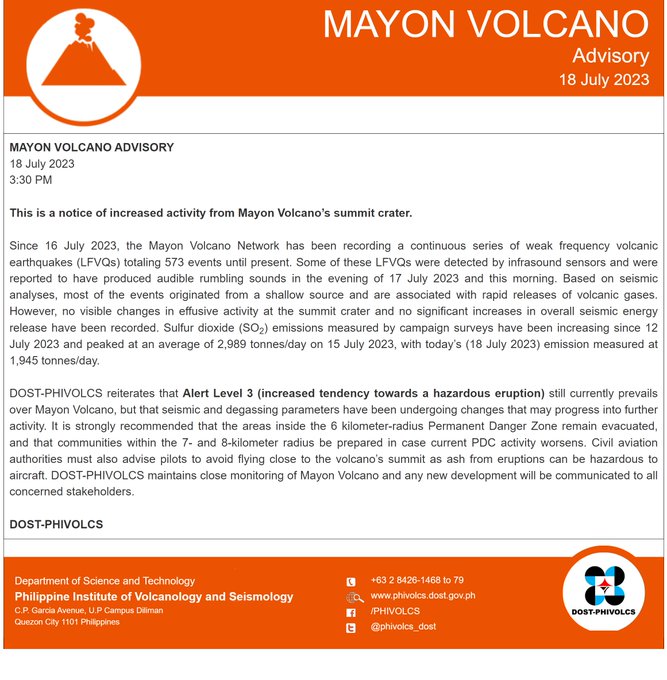
Update, July 9, 7:14 p.m., Pacific: This, from PHIVOLCS about an hour ago:
MAYON VOLCANO ADVISORY
10 July 2023
08:00 AMThis is a notice of increased activity from Mayon Volcano’s summit crater.#MayonVolcanohttps://t.co/jMDSLKIQb1 pic.twitter.com/2KA11ZLZXi
— PHIVOLCS-DOST (@phivolcs_dost) July 10, 2023
https://platform.twitter.com/widgets.js
Update, July 5, 11:27 a.m., Pacific: The weekly update through July 1:
VOLCANIC ACTIVITY REPORT: MAYON VOLCANO, ALBAY PROVINCE
25 June – 01 July 2023#MayonVolcano https://t.co/c6QJdHJYxp1/2 pic.twitter.com/EICgqd9sNt
— PHIVOLCS-DOST (@phivolcs_dost) July 5, 2023
https://platform.twitter.com/widgets.js
Update, July 4, 4:40 p.m., Pacific: This is from about 17 hours ago:
MAYON VOLCANO ADVISORY
04 July 2023
1:30 PMThis is a notice of increased activity at Mayon Volcano.https://t.co/MmMOte3I9z#MayonVolcano pic.twitter.com/N3QIwkpxF6
— PHIVOLCS-DOST (@phivolcs_dost) July 4, 2023
https://platform.twitter.com/widgets.js
It’s a July 5th morning in Manila now, so we’ll see what news comes in over the next several hours.
Quick update, 5:05 p.m., Pacific: The latest PHIVOLCS bulletin — still Level 3:
#MayonVolcano pic.twitter.com/xY9WZNsl82
— PHIVOLCS-DOST (@phivolcs_dost) July 5, 2023
https://platform.twitter.com/widgets.js
Update, July 3, 9:10 a.m., Pacific: Sometimes a volcano can wreak havoc quietly, as Mayon might do, if it keeps this up.
News media still report about 41,000 people affected currently. Here is the latest volcano news.
I’ll pin this post if and when they extend the exclusion zone.
Update, June 26, 2023, 10:08 a.m., Pacific: They are now recommending communities beyond the current 6-km exclusion zone get prepared to leave:
MAYON VOLCANO ADVISORY
26 June 2023
04:00 PMThis is a notice of increased seismic activity and ground deformation in Mayon Volcano.#MayonVolcanohttps://t.co/q3u3lnJ0Bd pic.twitter.com/gaC5qnOBEa
— PHIVOLCS-DOST (@phivolcs_dost) June 26, 2023
https://platform.twitter.com/widgets.js
Original post:
I don’t know anything about this Philippine volcano but want to mention it because over 10,000 people have been evacuated and PHIVOLCS is saying that there is a lot of magma down there, and this crisis could go on for months.
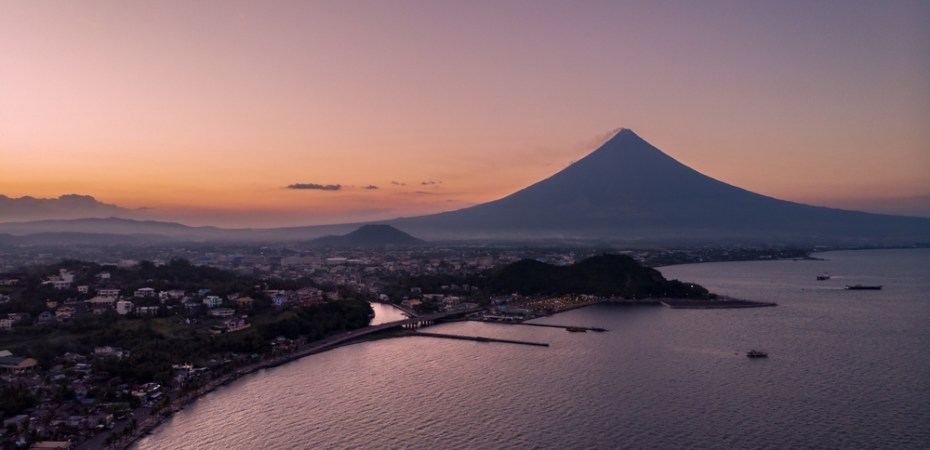
Apparently the beautifully symmetrical volcano is considered sacred and is also the centerpiece of a UNESCO biosphere reserve and important tourist area:
Relief Web has a brief summary (as of June 19) of what happened recently to ruin everyone’s fun:
…On 5 June 2023, the Philippines Institute of Volcanology and Seismology (PHILVOCS), a department of the Department of Science and Technology, raised the status alert level for Mayon Volcano in Albay Province, Region V (Bicol Region) from Alert Level 1 to Alert Level 2. This decision was taken due to the repeated collapses of the growing summit dome of the volcano, which caused an increasing number and volume of rockfall events.
What is expected to happen?
The average number of rockfall events per day increased from 5 to 49. Further, on 8 June 2023, PHIVOLCS-DOST raised the alert status of Mayon Volcano from Alert Level 2 to Alert Level 3. During the period of 5-8 June 2023, a total of 267 rockfall events and 2 volcanic earthquakes were recorded. Additionally, three Pyroclastic Density Current (PDC) events were observed on the Bonga (southeast) and Basud (east) Gullies.
This new status indicates that Mayon Volcano is exhibiting a magmatic eruption of a summit lava dome, which increases the chances of lava flows and hazardous PDCs affecting the upper to middle slopes of the volcano. There is also a potential for ashfall and volcanic gas emissions that can pose health hazards to nearby communities. As a result, PHILVOCS-DOST advises the public to avoid entry into the 6-km radius Permanent Danger Zone (PDZ) —
Reportedly, the lava might go beyond 6 km.
Getting back to Relief Web:
— and to be vigilant against the effects of volcanic hazards, including rockfalls, landslides, and ashfall. The agency also urges local government units to implement necessary preparations and contingency measures to ensure the safety of their constituents…
And so, here we are now:
Mayon Volcano – Philippines pic.twitter.com/mTbqRl9Tlj
— Catasach (@catasach369) June 21, 2023
https://platform.twitter.com/widgets.js
We’ll just have to wait and see how things go.
Featured image: cristan pago74/Shutterstock
 Flight To Wonder