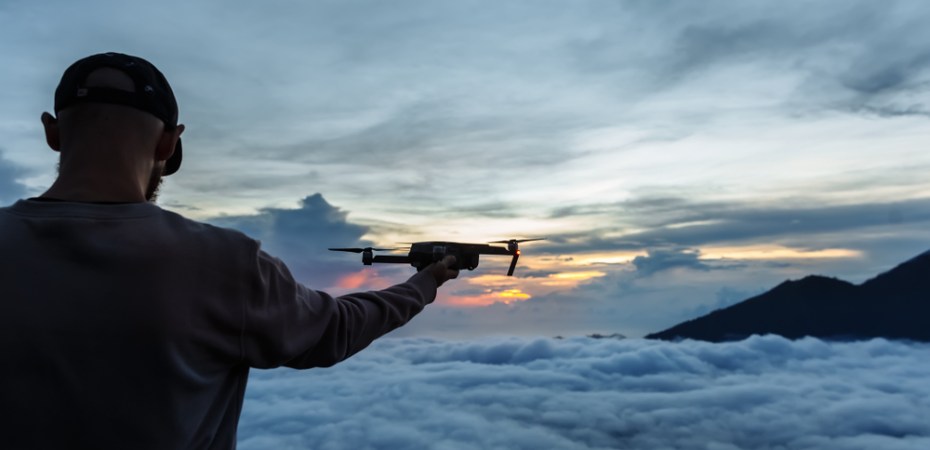
This week, scientists studied the ongoing eruption of Mexico’s Popocatepetl volcano with drones.
Flights like those mark the 21st-Century point where Science and Art often combine to help out volcanologists and to give the rest of us something cool to watch get life-saving information about a restless fire mountain to emergency managers ASAP.
For example, at Ecuador’s Cotopaxi:
Cotopaxi is considered one of the most dangerous volcanoes in the world due to the frequency of its eruptions, its eruptive style, its relief, its glacial coverage and the number of populations potentially exposed to its threats.
— IGEPN (autotranslated)
#ComunidadIG Secuencia térmica de alta resolución del volcán #Cotopaxi: ruta desde sur hacia el occidente.
En el video se pueden observar las diferentes anomalías térmicas registradas durante el sobrevuelo del 17 de mayo de 2023, mediante una cámara térmica portátil (FLIR… pic.twitter.com/PfHTWukFvl
— Instituto Geofísico (@IGecuador) May 22, 2023
https://platform.twitter.com/widgets.js
More information on Cotopaxi from the GVP (2023) and as drone-less Alexander von Humboldt would have seen it in 1802.
My favorite drone video thus far comes from Indonesia, where a layperson takes us from his informal base in some public area all the way up to the steaming summit of a Decade Volcano — Mount Merapi, which, yes, is just ‘over there’ in a neighborhood that millions of people call home (including a million living on the volcano’s slopes).
As you can can see while we cross the landscape nearby (and then go straight up that big crack in the volcano!), Gunung Merapi — a pyroclastic-flow and lahar generator — is very active. Tropical rainfall during the monsoon has carved deep canyons into those not-so-old but mostly vegetated flow fields.
Fortunately, it was quiet during this visit, although the volcano was and is working on two lava domes at the moment.
The view from Mount Merapi’s summit in this drone video is incredibly beautiful. That’s Central Java all around and the Indian Ocean, off in the distance.
Bonus points if you understand Indonesian, but these images are worth thousands of words.
Emergency management
Sometimes an eruption comes down to us.
That’s when drones are invaluable for safely assessing damage in real time, as well as for helping experts understand how that human infrastructure might affect the lava flow’s future path.
This was the case in 2021, when Cumbre Vieja erupted all over western La Palma, in the Canary Islands:
Drones also alerted authorities to the presence of some dogs, surrounded by that lava; drones carried some food and water to the trapped “perros”; and then drones showed evidence that persons unknown had, quite illegally but humanely, crossed the hot lava and rescued the animals, who did in fact later turn out to be all right.
And sometimes the eruption comes up, right where we live.
Cuss words and F-bomb alert.
A couple of years ago, the USGS released over a thousand hours of drone video taken during that 2018 eruption of Kilauea.
This is the Big Island Video News first installment of a three-part series on that release of drone footage:
Science
When it comes to research, the boffins can’t very well put rotors on their lab and send it out, but they manage to have some success (and luck — note the volcanic bombs missing the craft):
Yes, that Fuego. Here is the volcano’s GVP page.
Some lagniappe:
Of course:
Featured image: Aliaksandr Barouski/Shutterstock
 Flight To Wonder