The Cascades Volcano Observatory monitors this and other active Idaho volcanoes — on the current map at that link, though, Craters of the Moon is one of the white “unassigned” volcanoes.
It islisted as a low-threat hazard, however, and the Yellowstone observatory people wrote in 2019:
Over the past 15,000 years, eruptions at Craters of the Moon have occurred about every 3,000 years, and so the next eruption might be expected sometime in the next 1,000 years.
…The lava field covers over 600 square miles. Eight different eruption episodes are known, and each episode lasted hundreds to perhaps thousands of years. An interesting feature of Craters of the Moon is that about the same volume of lava was erupted during each episode, therefore it is considered to be “volume-predictable”. Volcanologists therefore expect the next eruption to produce 1-1.5 cubic miles of lava.
…While the populated communities of Carey and Arco are not expected to be directly affected by the next eruption, the lava flows can threaten rangeland and farms. Eruptions may also impact transportation: U.S. Highways 20, 26, and 93 pass through or near the volcanic area.
There’s nothing available, not even speculation, about the long-term effects of an eruption lasting for centuries to millennia.
Idaho certainly would transition into an amazing combination of Hawaii and Iceland for volcano tourists!
Let’s start out with a general tourism video:
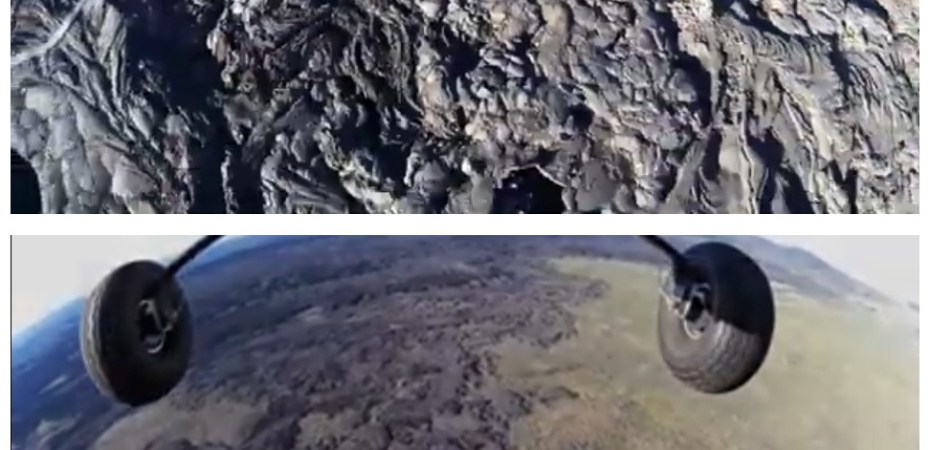
Now let’s visit it through the eyes of Rick and Deb Deigsler to see exactly what that geologist meant when she said that the people who named this place “got it right” — if not for the occasional greenery, blue sky, and graffiti, this could be a flyover of some parts of Mars or the Moon.
And it’s active!
The featured image for this post is two screenshots from this video.

 Flight To Wonder